


St. Luke’s campus on Germantown Avenue. (Photo: Rasheed Z. Ajamu)
Imagine the neighborhood of Germantown in 1811. It was still a separate borough from Philadelphia. It was over a century before the multiple waves of the Great Migration brought many African-American families to the neighborhood.
So many physical and cultural changes have happened in those 200-plus years, but in that time, St. Luke’s Episcopal Church has been in the neighborhood, with a history of neighborly love that still exists.
It’s now 2024, and after COVID-19 paused many activities, the church is bringing back and strengthening its community outreach and service work, and it hopes to support other work in the neighborhood.
“I think the biggest hallmark as it is for Germantown here at the church is change. It’s constantly changing,” said Father Dave Morris.
Morris became the rector of St. Luke’s in 2018. Ordination is his second occupation, says Morris. He used to be a banker but likes ordained ministry a lot more.
“The congregation, like the neighborhoods of Germantown, is changing constantly. You know, we have core members who have been here for decades. I would say most of the people have been here for maybe three or four years or less. So, it reflects the neighborhood. You know, as I said, Germantown is changing all the time.”
Within the change, St. Luke’s has been known for its food pantry, providing and distributing food weekly on Friday mornings from 9:00 a.m. to 10:00 a.m. Most of their donations come from a partnership with Philabundance. Still, they also receive food donations from local churches like St. Paul’s Episcopalian in Chestnut Hill, St. Martin-in-the-Fields, and St. Thomas Whitemarsh–all of which do regular food drives for St. Luke’s and use the church as a hub for service work.
Roberto Morales Velez, the property manager at St. Luke’s, also helps run the food pantry. He says the church serves between 45 and 50 people/families every week.
“The most I’m proud of is I can help someone to put a meal in their family’s home. Also, I provide them with between three to four days of food. I know that no one’s going to be going hungry because they will have food for those days,” says Morales Velez.
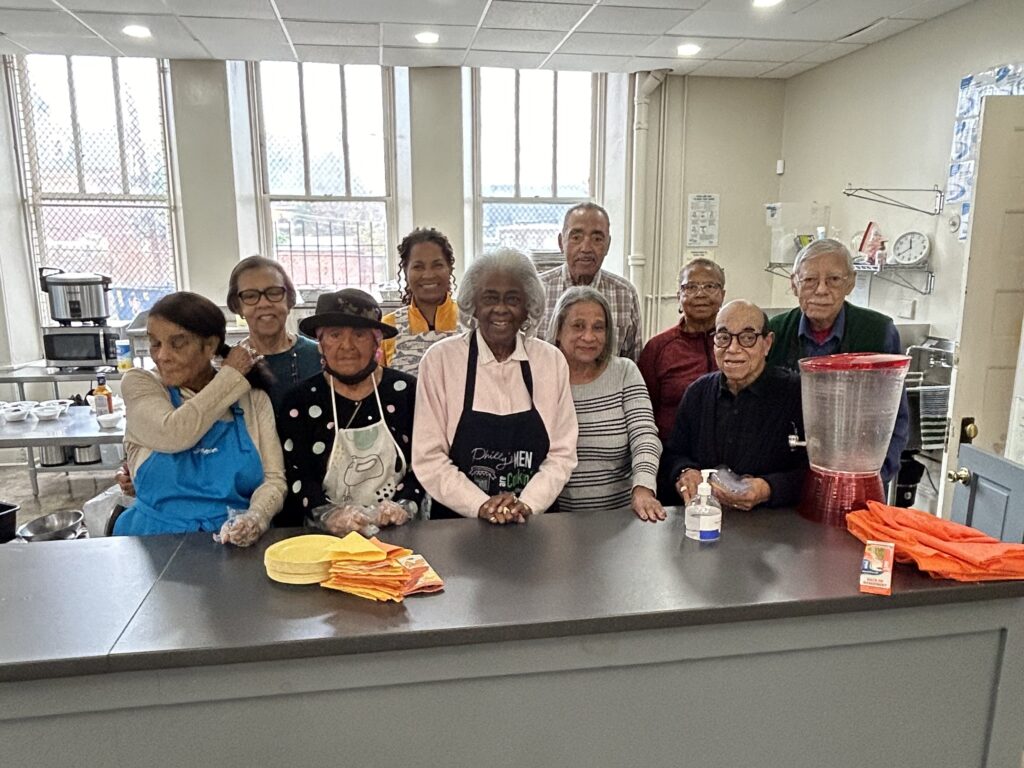
This year, St. Luke’s has also revamped their hot meal programs on Saturday afternoons, usually run from 12:00 p.m. to 1:00 p.m. or later, in the parish hall. Anyone can stop by for a hot meal.
Richard Roccato, who volunteers with the nutrition ministry program, just retired and was happy to take on more volunteer positions with the church. He and his husband had been “church shopping” a while ago and decided to go to St. Luke’s in Germantown after they connected with their neighbor, who has been involved with the parish for 30 or more years.
“The congregation is very diverse, which is one of the things we were looking for. We were both brought up Roman Catholic, and St. Luke’s obviously is Episcopal. So it was just the connection [at] the first moment. And St. Luke had so many different opportunities for us to work in the community and be engaged in the actual programs as opposed to just, you know, sitting in a pew and going home,” said Roccato.
Roccato says the wintertime has more flexibility with their menus, where folks are open to different filling hot meals. They make hearty soups, pasta & meatballs (usually turkey or beef because neighbors have requested no pork), warm sandwiches, desserts, and a lot of fresh fruit.
Salads haven’t been the biggest hit, says Roccato, laughing, but they definitely try to add other sides to all the entrees they serve. Whatever is left over, they pack in to-go containers, label them, and distribute them to the community fridges.
Roccato likes that their volunteer teams try to be creative with their menus. One of their nutrition ministry teams is named Team Caribe, and many of the folks are from areas in the Caribbean, so they tend to add a Caribbean flair to many of their dishes, even in a small way.
Roccato said his team was one of the first to start serving meals after the pandemic, packing them in to-go containers and handing them out. But they want to get back to having more people sitting down restaurant style and being served.
He gets feedback from some community members that St. Luke’s campus is beautiful but seems intimidating. It’s set back from Germantown Avenue, and people might not know they are welcome in the space.
As the property manager, Morales Velez wants to remind people that St. Luke’s is a friendly environment, and he encourages people to not only come in for meals and the food pantry but also just to walk around the campus, find out what they’re doing, and how they’re serving the community.
Father Morris also notes that the church has installed welcome banners and picnic tables. They also have plans to install dispensers for plastic bags for dog waste – small ways to send a welcoming invite onto the premises.
Morris says they also try to bring meals out in the front near Germantown Avenue when the weather is nice.
Father Morris notes that many of their partnerships & collaborations and the service work they focus on come from feedback and conversations with community members. It’s why they do the nutrition ministry. But it’s also why they host gun buybacks and partner with Heeding God’s Call to End Gun Violence.
Some of St. Luke’s parishioners have been personally affected by gun violence, but they also know the general community has as well.
“Ash Wednesday of 2024 coincided with Valentine’s Day. And so we did ashes out on Germantown Avenue to put on people’s foreheads. But at the same time, we put out big red hearts. No names, but a banner that said each heart represented a child killed by gun violence. And it opened up a dialogue with people who were walking by, especially several mothers whose children had died,” said Morris.
The biggest change that Father Morris and the congregation have noticed is what they consider rapid real estate development. The reaction from Morris and the parishioners is trying to find ways to do their part so that people aren’t forced out of the neighborhood due to economics.
This means that in 2025 and beyond, the church would like to focus some of its work on housing.
As Father Morris mentioned, the church sees how Germantown is changing, as many communities around Philadelphia are also changing. They know they want to be proactive about getting involved and partnering with folks working on equitable housing for everybody as a reality.
The church also has a monthly free legal aid clinic, which can help with non-criminal issues like evictions, benefits questions, and wills and trusts. They also have a summer camp for kids, a tutoring team that works with children in local schools, a senior lunch program, and seasonal clothing collection drives. They were also a vaccination center when the pandemic first started.
Morris sums up his feelings on the unison between the Episcopalian faith and the church’s community work. “I always go back to the book of James, which is in the New Testament, and James said that faith without works is dead. And so faith for us is putting into action our love of others.”
He ends: “We’re not a social service organization per se. We are a church founded in love. And we feel that our duty is to love in return.”
For more information on St. Luke’s services and church programs, you can visit the calendar on their website.