


Designers, organizers, and models gather in the Crossroads space for a group shot. (Photo: Rasheed Z. Ajamu)
May’s closeout category was “Reduce. Reuse. Repurpose. Repair,” as brought to life by nine designers at the recent first-ever Crossroads Rummage Fashion Show.
On the 30th, community members filled every seat at the Crossroads Women’s Center, where the former hardware store interior was transformed into a grungy, underground-inspired scene.
Models worked the runway in designs assembled from secondhand clothing and other items from the Center’s inventory. And — to our surprise (we promise) — GIH’s very own Maleka Fruean helped keep the vibes high as the event’s MC.
“We have a rummage here at Crossroads, and we thought, what could we do with it?” said show co-organizer Arraiyan DuBose. “How can we make something that was inclusive, that was helping the planet, people, women, and caregiving and all those things?”
The Center’s Rummage takes place every Friday and welcomes everyone to bring a bag and fill it, starting at $1.
“We’re trying to counter all of the fast fashion that’s going on and to really show people that you can use the stuff that’s in your closet or stuff that’s at a rummage or thrift shop to be creative and create new looks.”
Fast fashion is the mass production of trendy, low-cost clothing by copying runway trends and releasing new styles often. The clothes are low-quality, meant for a few wears before disposal.
Fueled by hyperconsumerism, the fast fashion industry causes considerable environmental harm by producing large amounts of textile waste and relying heavily on synthetic materials. The model also raises major ethical concerns, particularly around labor exploitation.
As DuBose put it, “Fast fashion that is destroying the planet.”
Celeste Preston, another co-organizer and event judge, agreed. She called the event timely, saying, “It’s really in alignment with a lot of what’s been happening locally, but also globally.”
“Some of the movies that have come out recently, like The Devil Wears Prada [and] the I Love Boosters movie, are in alignment with just putting more attention on how workers are being underpaid and overworked.”
Alongside Preston, judges included Itohan Asemota (HNI Collective), Robyn Dombey (PA Fibershed), Ruby Gertz (Slow Fashion Academy), and Sarah Tremain.
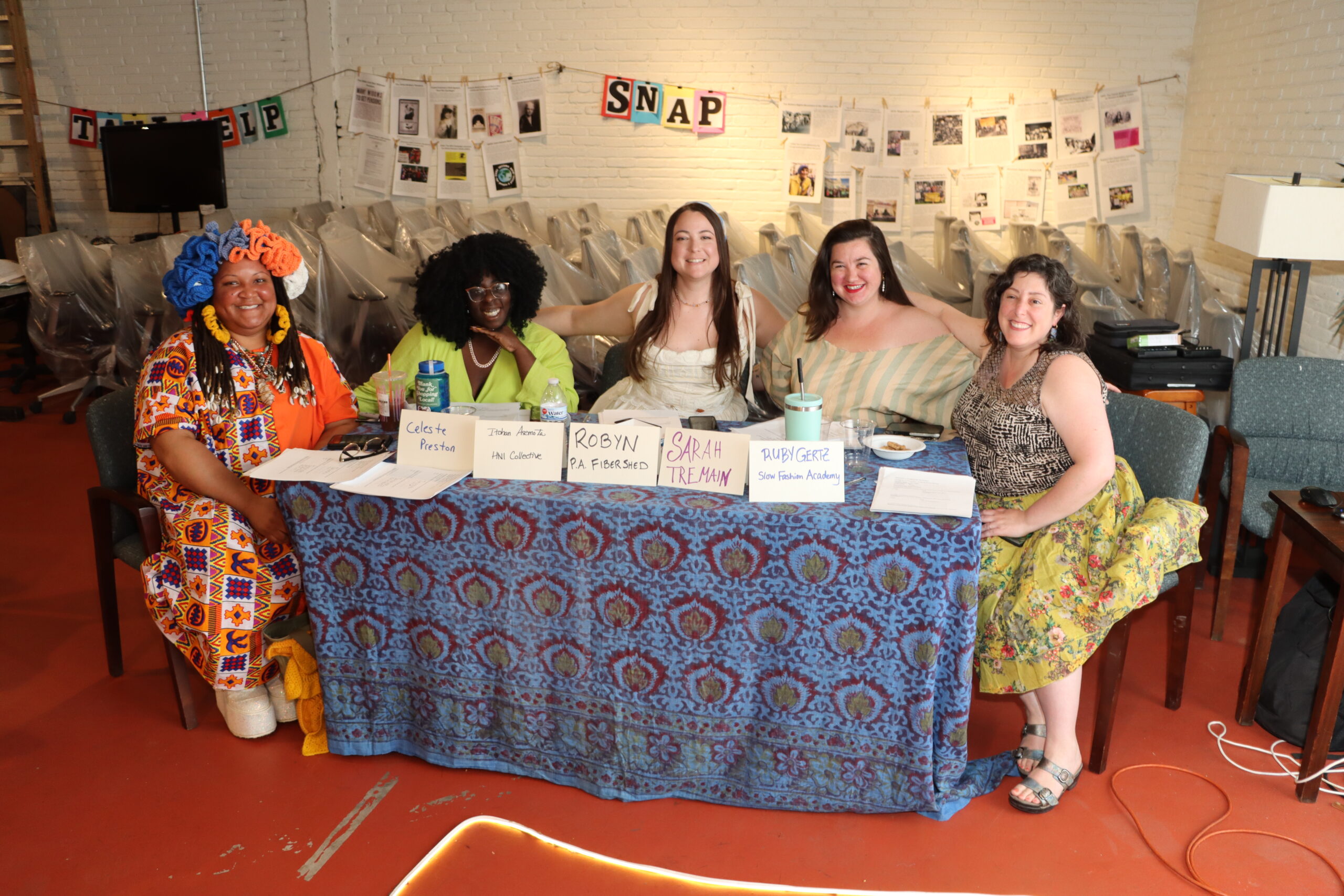
DuBose and Preston agree there’s no better vessel than fashion to start hyperlocal conversations around reuse and recycling.
“It’s one of the essential human needs,” Preston said, tying clothing to fashion. “It’s also a form of expression.”
In the lead-up to the fashion show, organizers planned a series of events beginning in early April 2026 to help educate the community and promote reuse and sustainability. These included film screenings and sewing and crafts workshops, each facilitated by members of the judges’ panel.
Together, these events helped keep an educational but interactive thread running through the community so the message wouldn’t be lost. DuBose said the organizers themselves weren’t especially well-versed in the subject at first. However, they became much more adept through the months-long planning process.
The show featured a traditional runway walk, where models brought the designers’ wildest imaginations to life. Pre-recorded videos of designers discussing and documenting their creation processes played between sets.
Designers included Mazzi Ingram, Antoinette Naseef, Marissa Haire, Angie Kiehne, Ozzy Faas, Zayna Gilgeous, Cole Felton, Alexandra Tierney, competition runner-up Sarah Conboy, and competition winner Bridget Phelan.
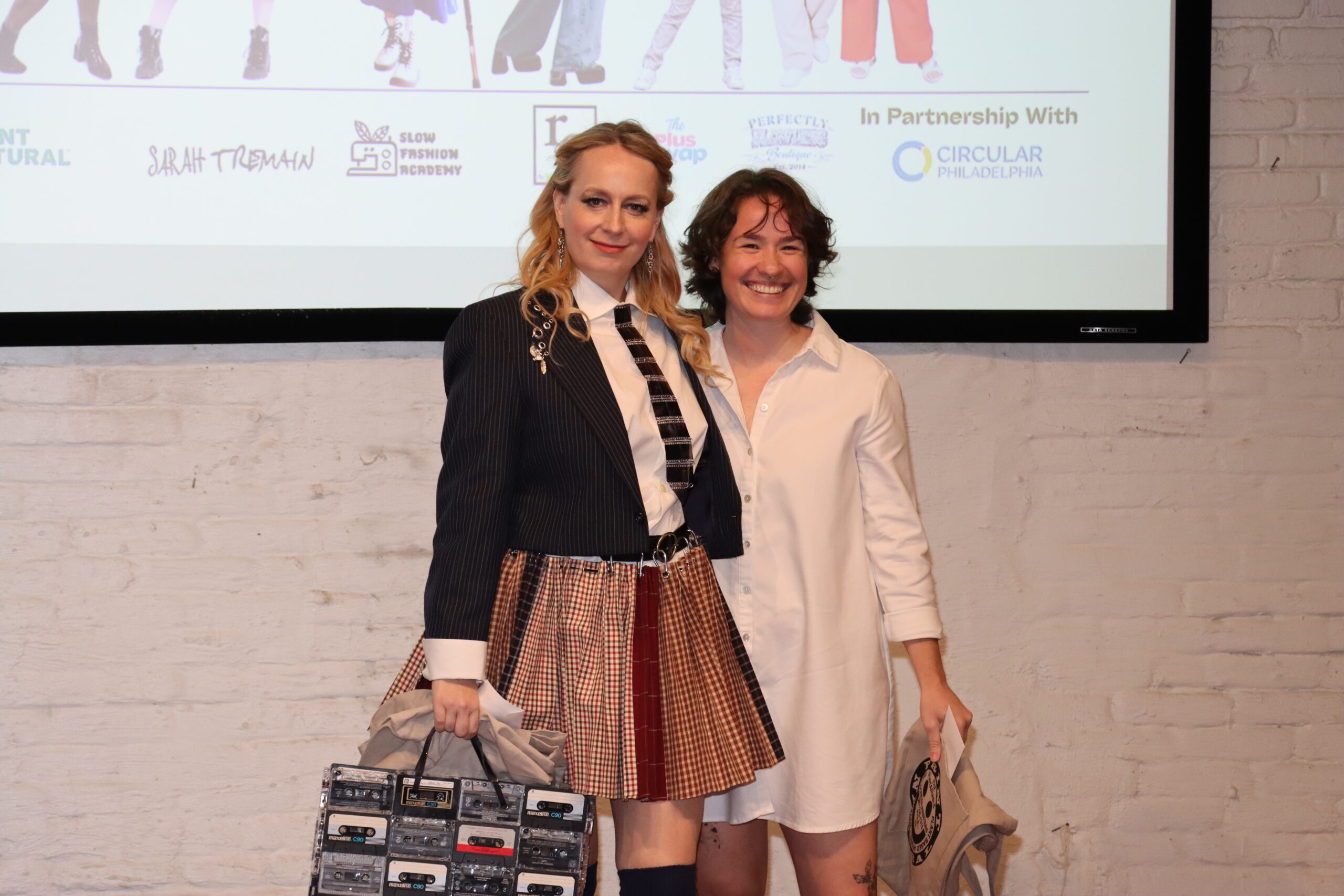
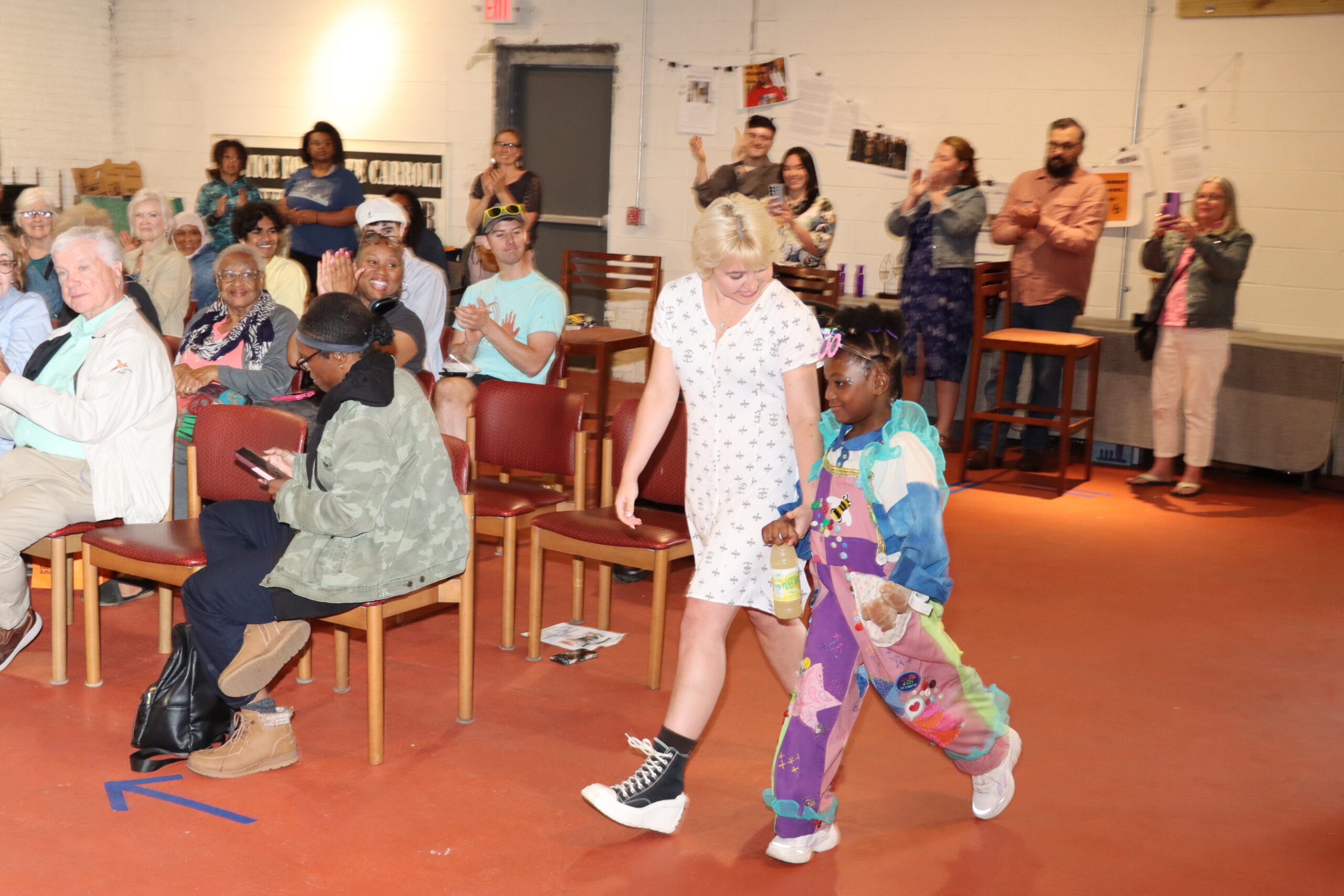
Notable local figures on the runway included State Rep. Darisha Parker and poet and healing artist Felicia Casher.
The event also featured an open runway, where attendees could drape themselves in finds and join the fashion show. One participant, Ronnie, undoubtedly stole the show with her hand-designed jacket adorned with “Project Rummage Runway,” winning that portion by popular vote.
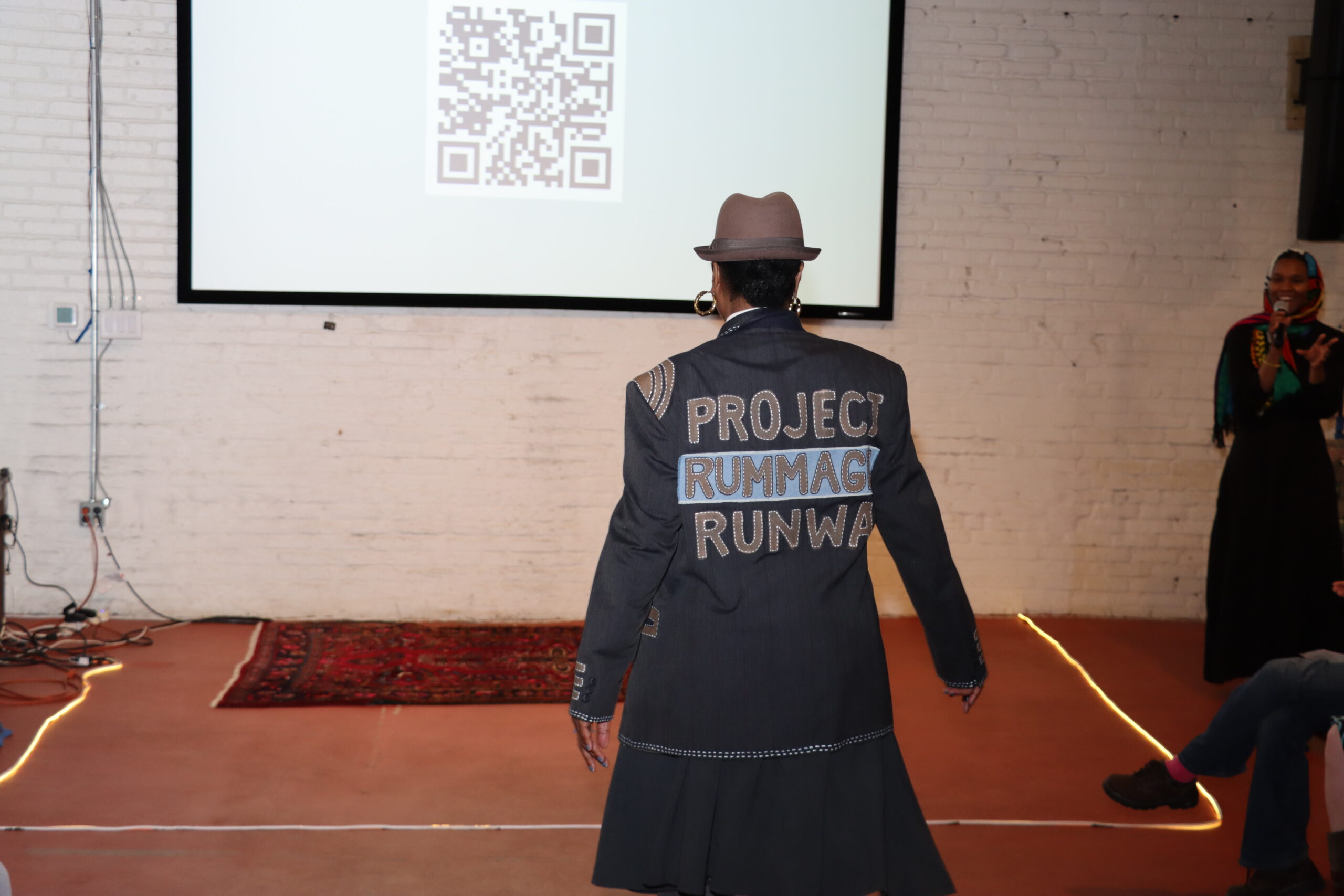
Local organizer Yonique Myrie was amongst a few of the six participants strutting on the open runway.
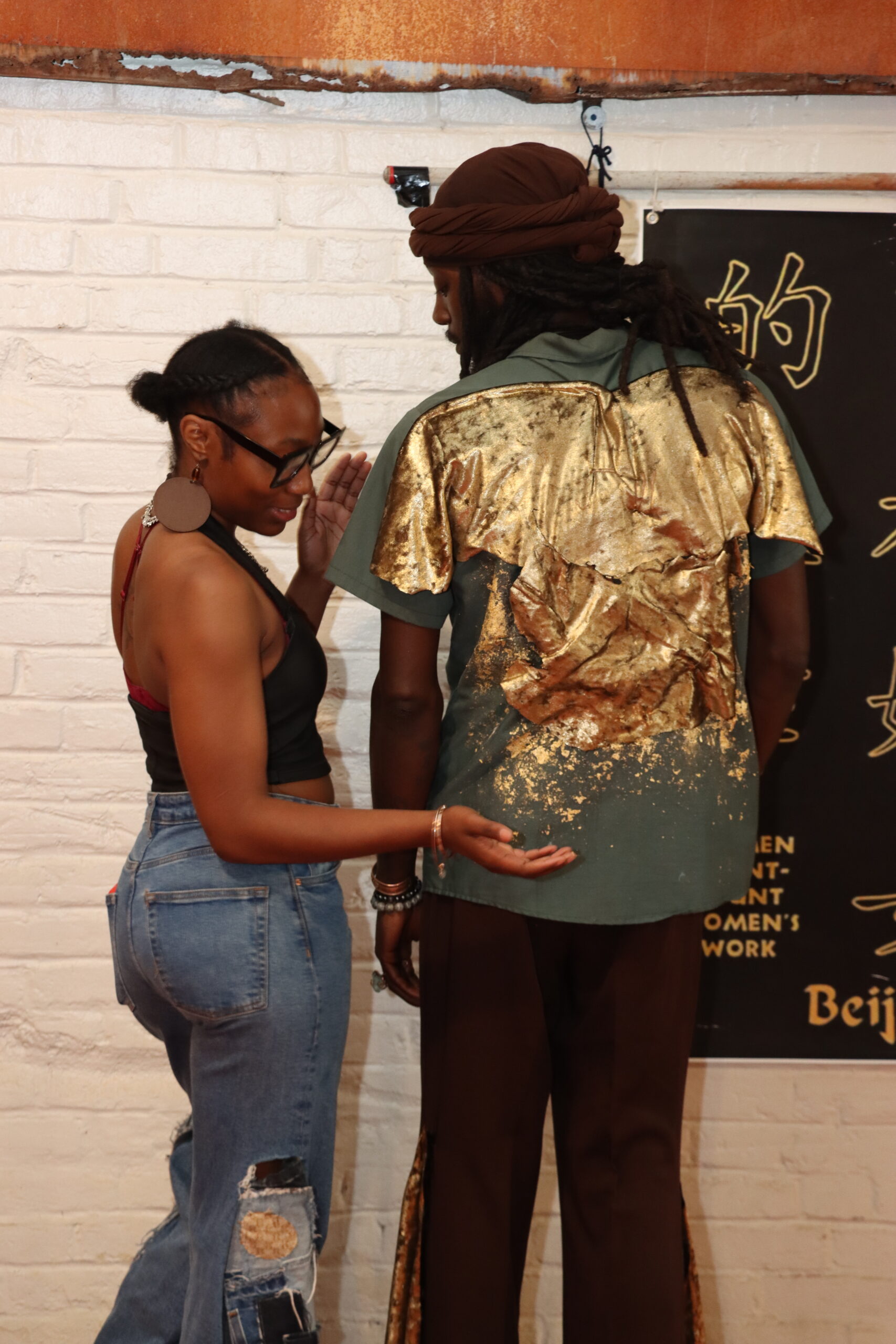
Designer Mazzi Ingram also participated in the open runway. Her design, “Business of Blessings,” was inspired by the 17th environmental justice principle, calling for more mindfulness about consumer habits and waste disposal, combined with the pursuit of wealth.
Ingram blended these concepts through an Afrocentric lens and crafted her design using a work shirt and slacks from the Rummage, a wooden wreath and leather straps from the Resource Exchange, and gold fabric and flakes from the Fab Youth Philly Makers Lab.
Through her design, she asks folks to redefine what “wealth” looks like beyond monetary value. Offering her design philosophy to those new to the craft, she said to remember that imagination does half the work.
“If you can see it, you can create it,” Ingram said.
Coming out of this year’s event, organizers have high hopes for another after a successful first run.
Preston said: “Maybe we’ll have more people join the planning team next year so that we can keep doing this… If there’s enough buzz, maybe we can have some more mending workshops.”
Crossroads Women’s Center’s weekly Rummage takes place on Fridays from 1–4 p.m. at its home base, 5011 Wayne Ave. The Center will also host a Clothing & Resource Swap on Saturday, June 27, at noon alongside Philly Pheminists and other organizations.

Rasheed Z. Ajamu is a Germantown-born and raised Black journalist, reporting from a place-based lens to see how things affect life in Germantown. They strive to preserve the stories of Black natives in an ever-changing Philadelphia and Germantown social landscape.