


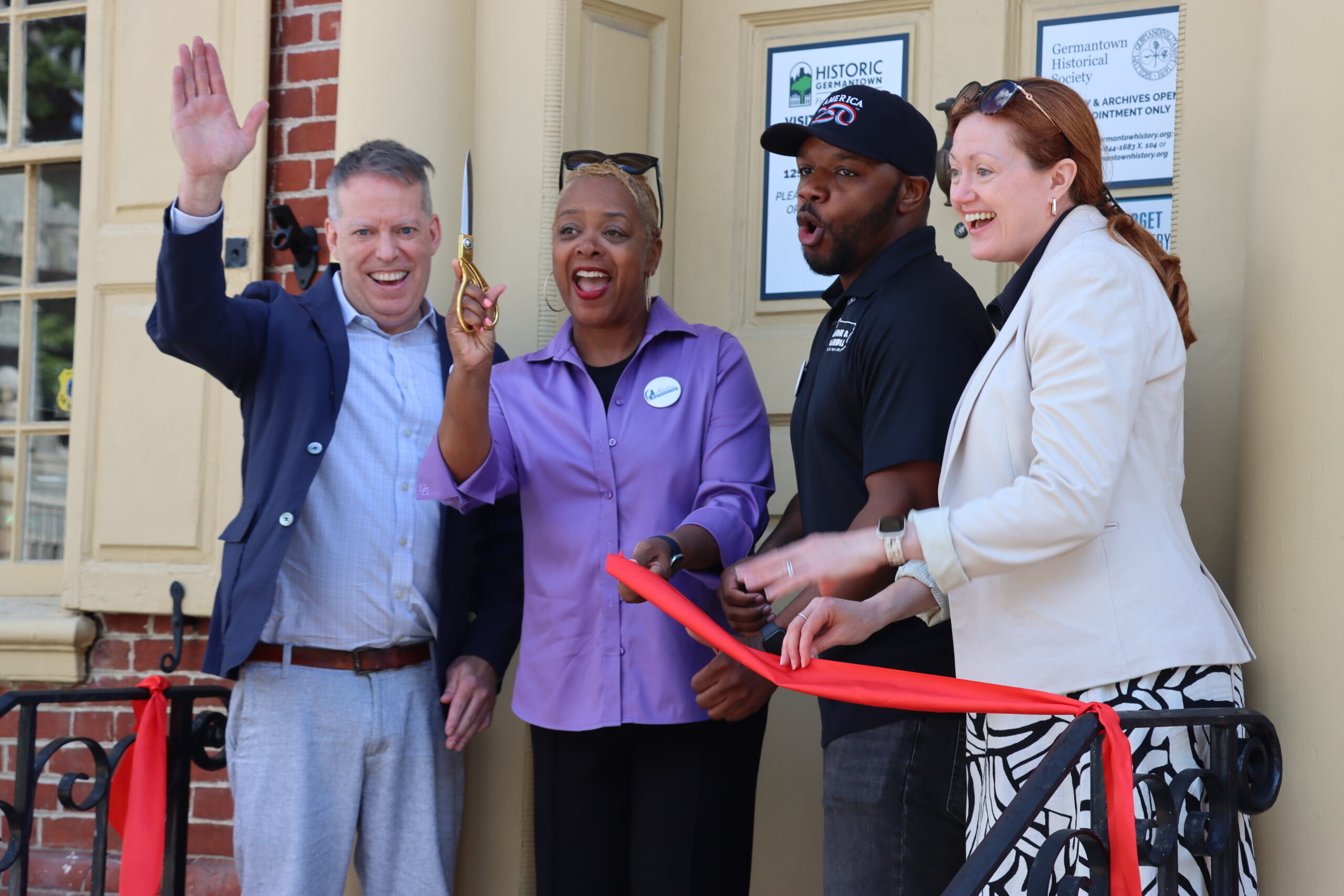
On Wednesday, July 9, good people and good weather gathered in front of Historic Germantown (HG) for the ribbon cutting of its new Visitor Center.
Supported by the City of Philadelphia and the Philadelphia Fund Collaborative for the Semiquincentennial, the Visitor Center serves as a bridge to the 20 historic houses, museums, and cultural institutions that make up the consortium.
The installation is a permanent addition to Historic Germantown (HG), extending the nation’s 250th celebration well beyond this year.
Consortium and community members sat and stood side by side to hear about the Center’s importance. Speaking at Wednesday’s unveiling were HG Executive Director Tuomi Forrest, Visit Philadelphia VP of Enhancement Jessica Calter, and elected officials Councilmember Cindy Bass and State Rep. Andre D. Carroll.
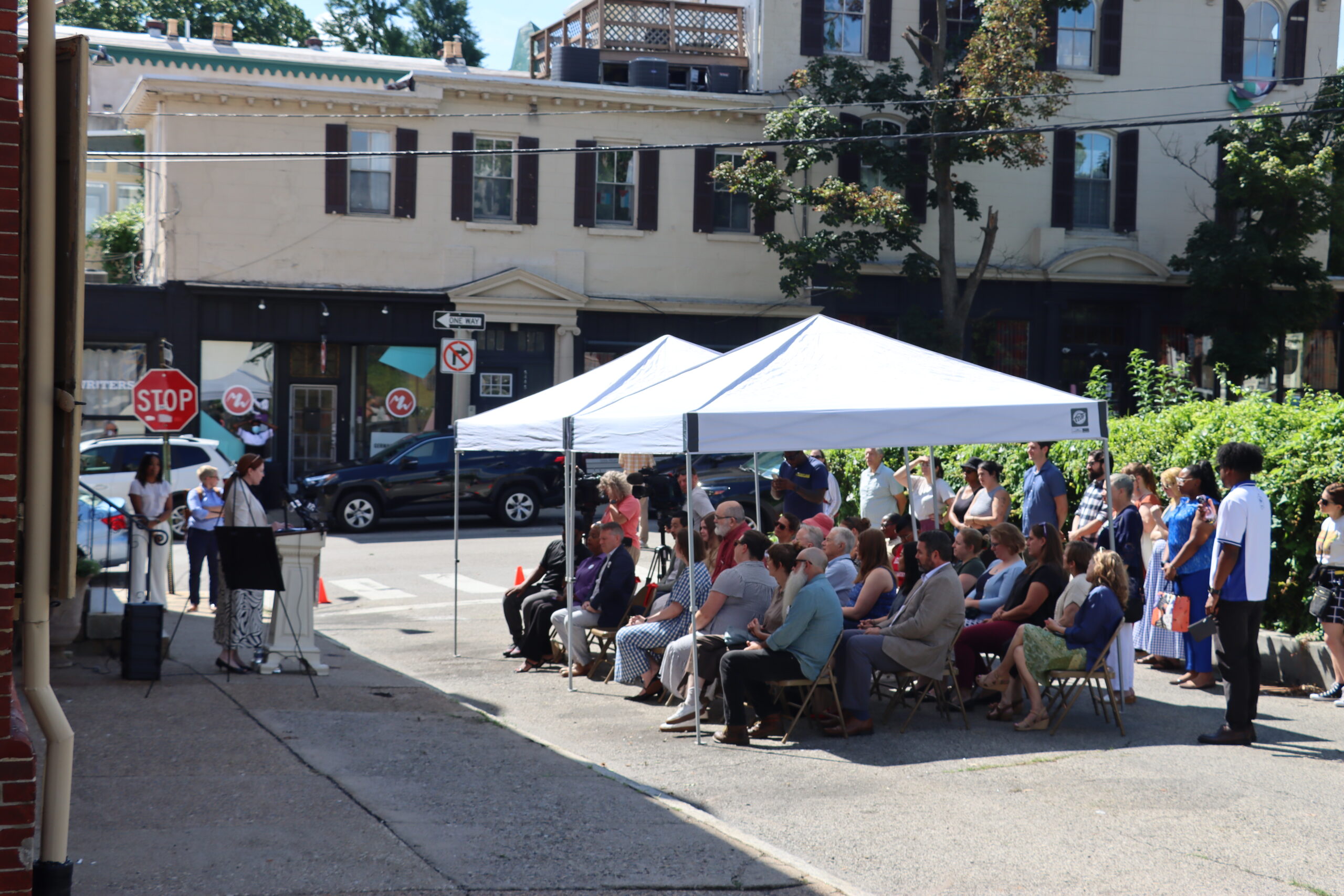
Calter said the Visitor Center will serve as a better way to connect Germantown to the city’s broader tourism ecosystem.
For Rep. Carroll, who “never, ever had the opportunity to visit any of the museums that existed” growing up in Germantown, the new asset will “mean access for a lot of young people in this neighborhood.”
The 20 Historic Germantown sites, according to HG’s ED Forrest, host over 125,000 visits yearly — serving neighbors nearby and visitors from across the globe. He says the number is set to grow, especially with the help of the new center.
“Our 20 member organizations are a primary draw for why people come up and visit this part of the city and provide significant economic benefit to the neighborhood, conservatively estimated at $12 million per year in benefit to the community and region.”
Forrest continued, saying the Center “both builds upon and amplifies this impact, welcoming and orienting more people so they visit more places and patronize more businesses.”
The Center sits inside HG and is organized into two parts after you enter the building from Market Square.
To your left, there’s a gift shop and welcome gallery, curated and organized by HG Manager of Operations and Partnerships Caitlin Mongan, offering different Germantown-related wear, reads, and ephemera.
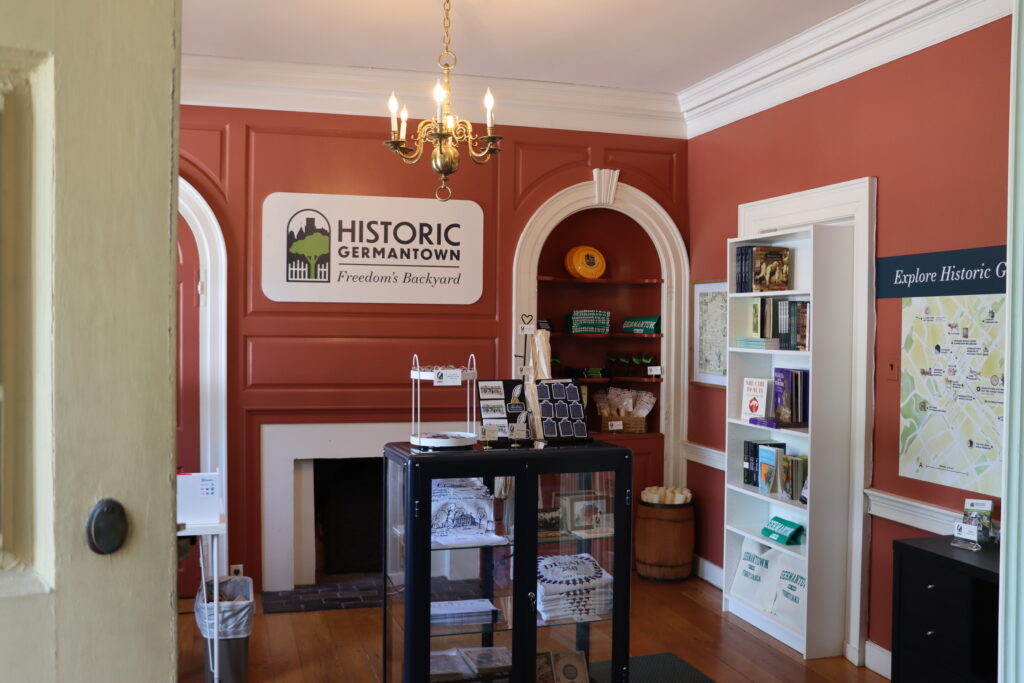
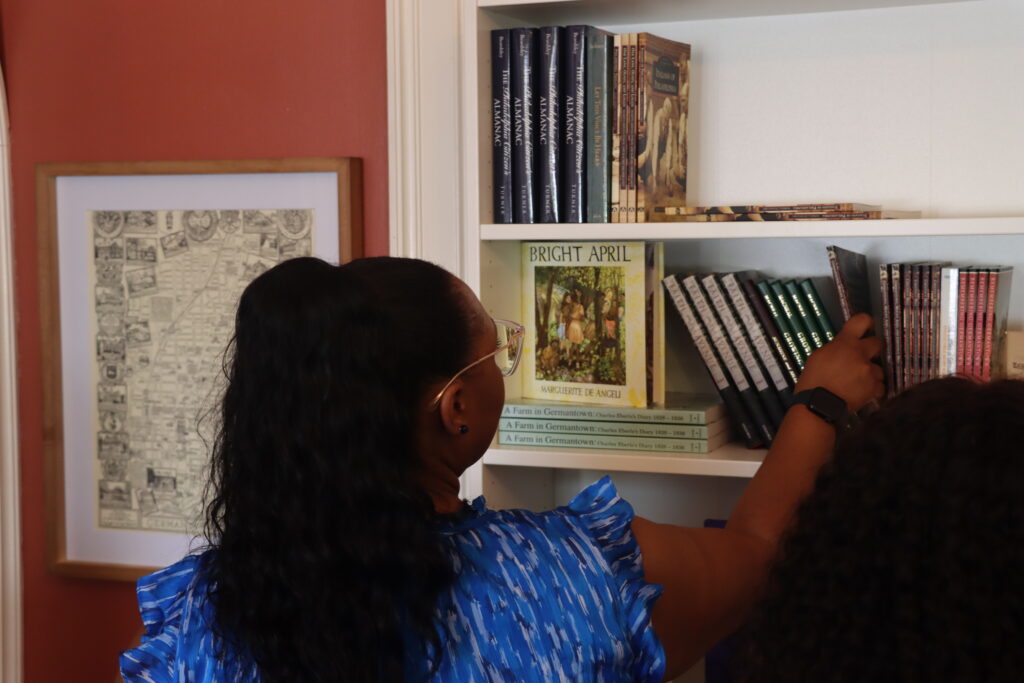
It will also play a key role in answering visitors’ questions and helping them build custom itineraries to plan their explorations, a brand-new feature of the consortium.
Adjacent to the welcome gallery is the second part of the Center, allowing visitors to dive right into the region’s robust cultural and social history as they begin their journey out.
It comes in the form of a brand-new exhibit, providing a thematic overview of the history of Germantown.
Germantown, on display
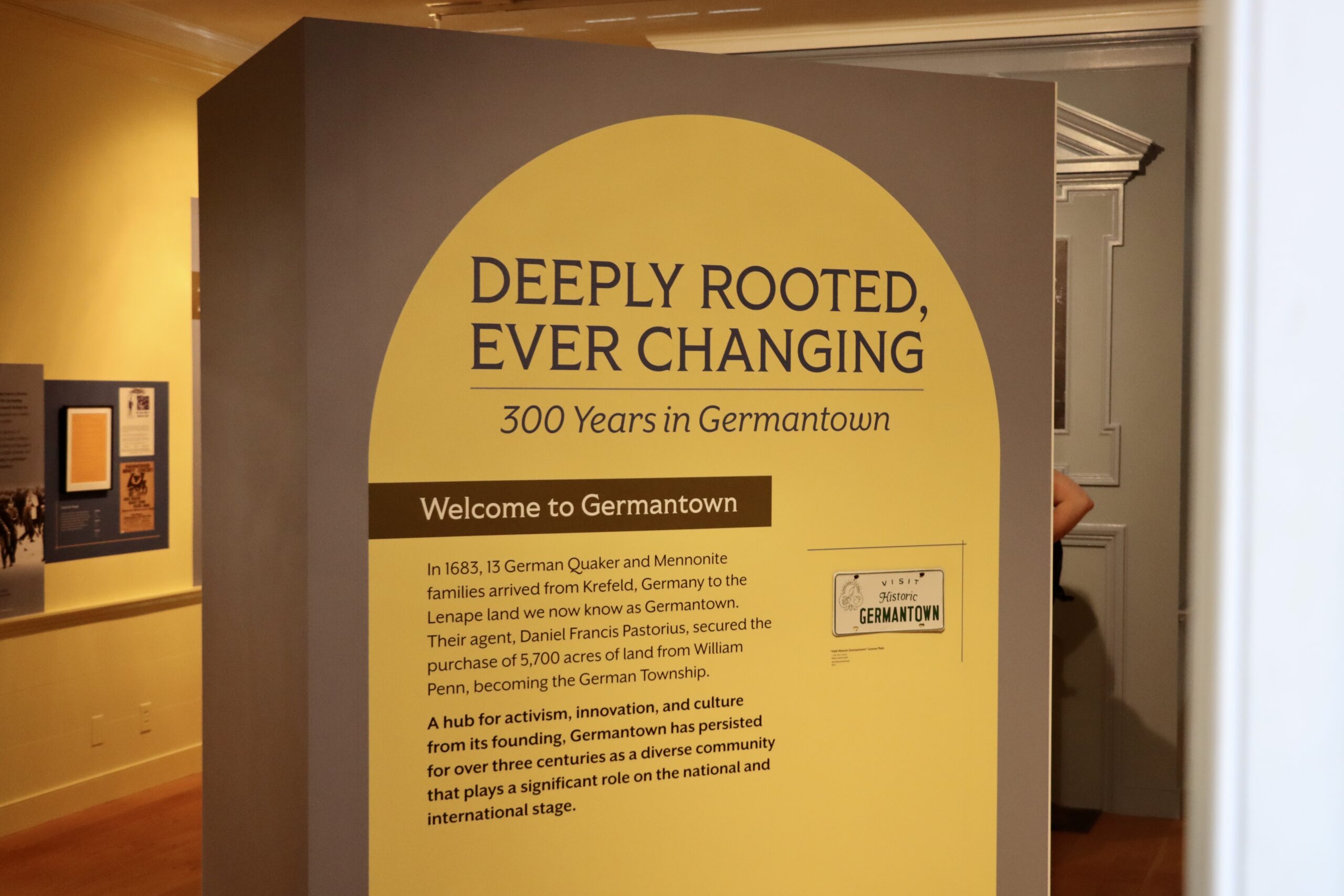
The exhibition, titled ‘Deeply Rooted, Ever Changing: 300 Years of Germantown,’ explores the neighborhood’s history spanning from the founding of the German Township through the 1960s–70s civil rights era.
The exhibit splits Germantown’s story into four themes: 1) corridor, 2) center of industry and innovation, 3) faith and family networks, and 4) activism and advocacy.
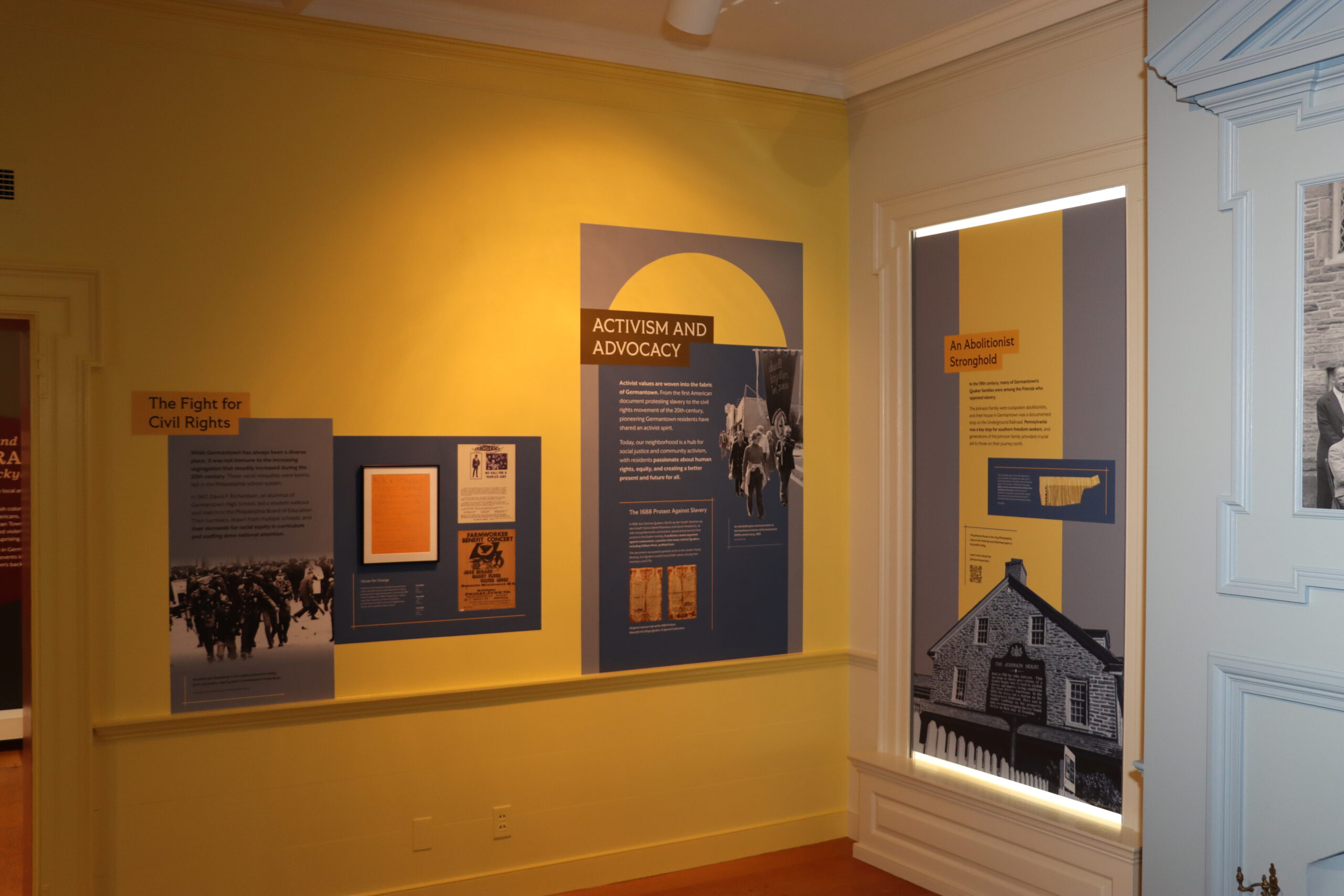
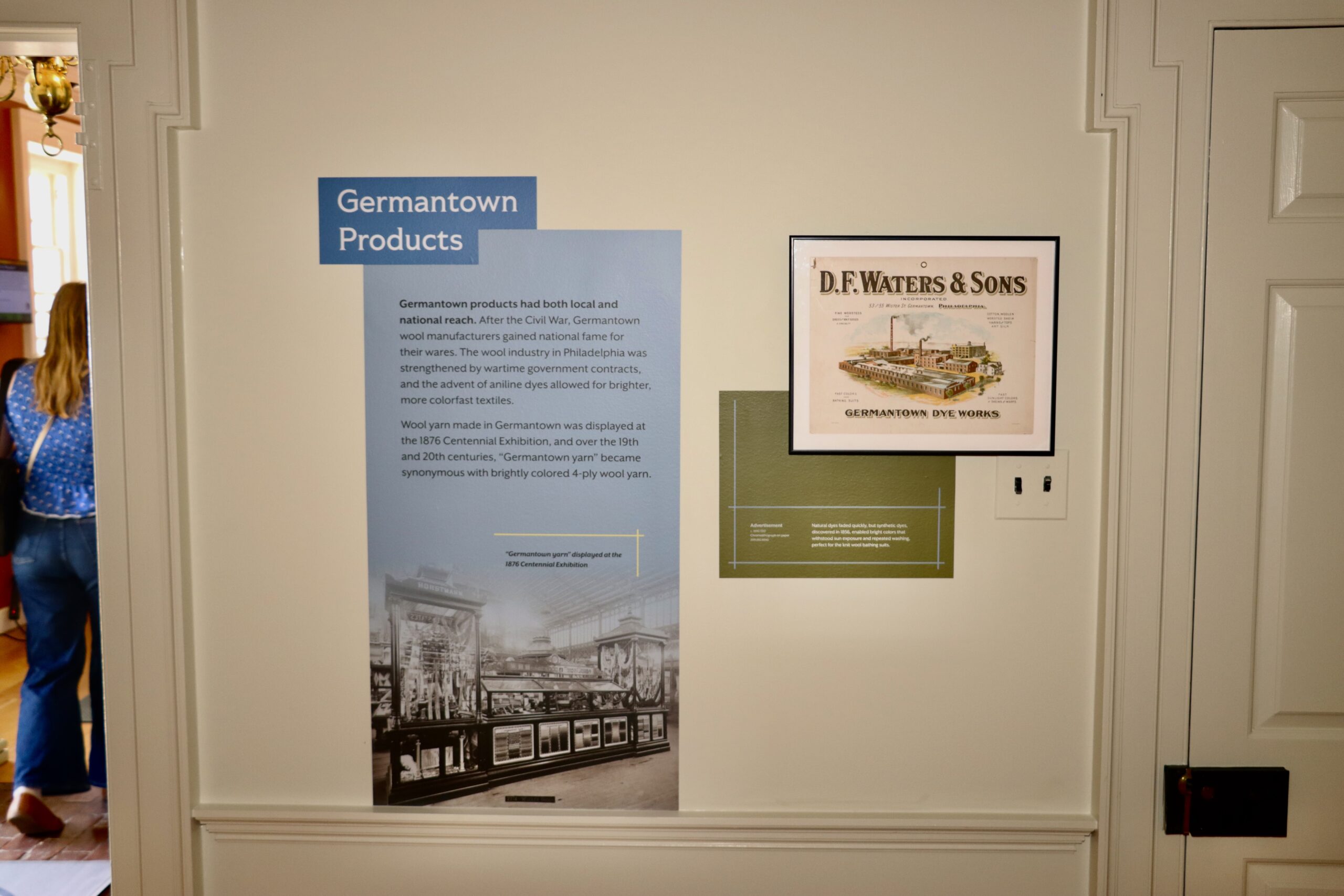
According to the HG’s Curator of Collections and the exhibit’s curator, Kaila Temple, all items within are uncovered from the Germantown Historical Society’s collections, except for one object, on loan from the Wyck House.
The vision was conceived in partnership with all 20 sites, which helped provide the thematic structure, alongside HG consulting historian, Dr. Bethany Wiggin. Metcalfe Architecture & Design and Art Guild supported the design and visual engagement of the exhibits.
Temple said the exhibition features things that still exist and things that no longer do — each with direct connections to one of the 20 member sites. She said the vast collection is a reminder that people of all backgrounds have long cared about preserving this history.
The curator elaborated: “It’s been a lot of different things to a lot of different people. A lot of different communities claim their roots here. We really tried to fit a lot of history into a room this small… Germantown is a collection of many stories. No one owns the story of Germantown.”
Beyond the Germantown exhibition, in the next room, sits the rotating exhibit ‘Rebellion and Remembrance in Freedom’s Backyard,’ which highlights events preceding the American Revolution through the 1876 centennial.
It includes moments and reflections on the 1777 Battle of Germantown and evidence of the enslavement of Black people in the region, balancing out the often unsung narratives in the land’s history.
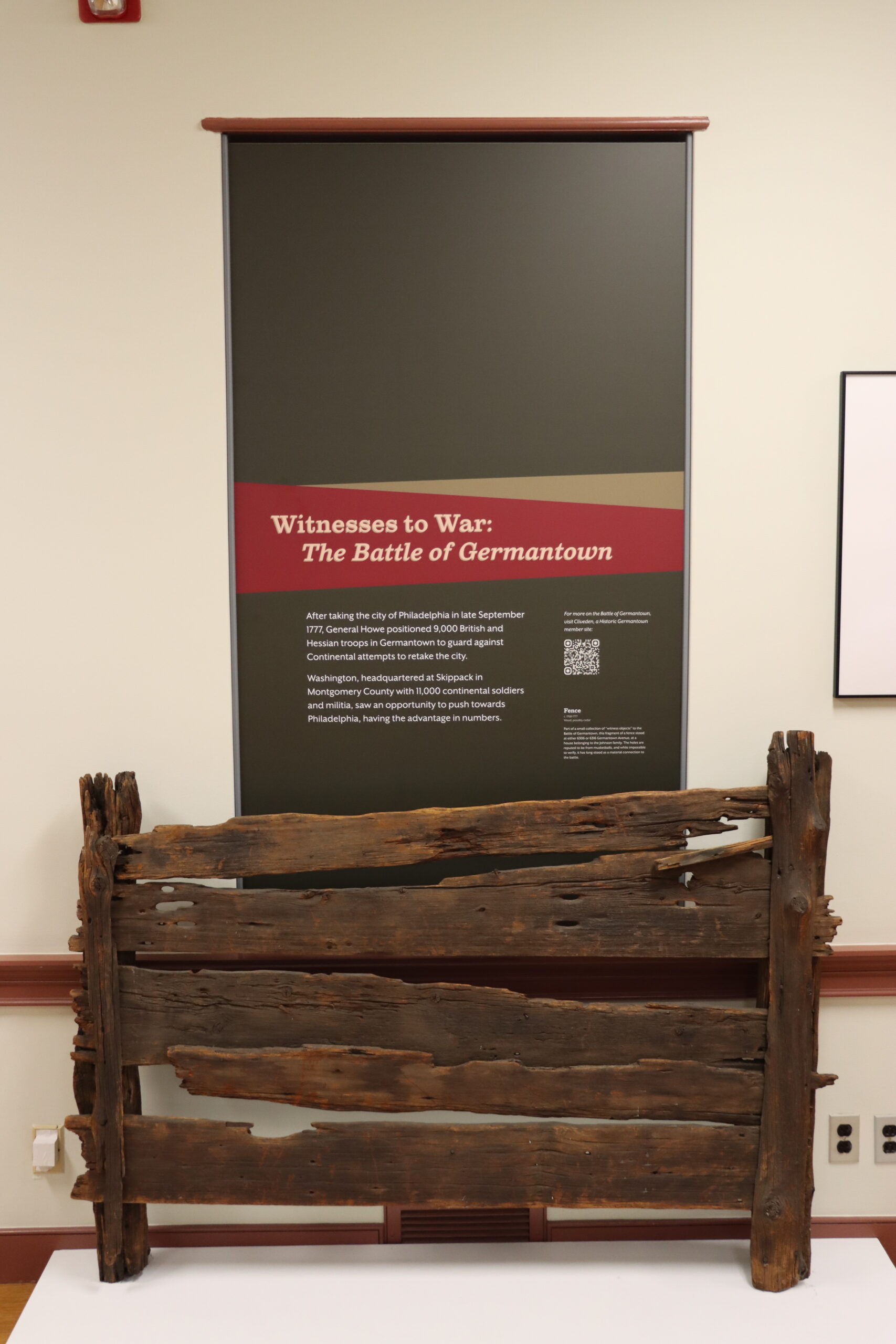
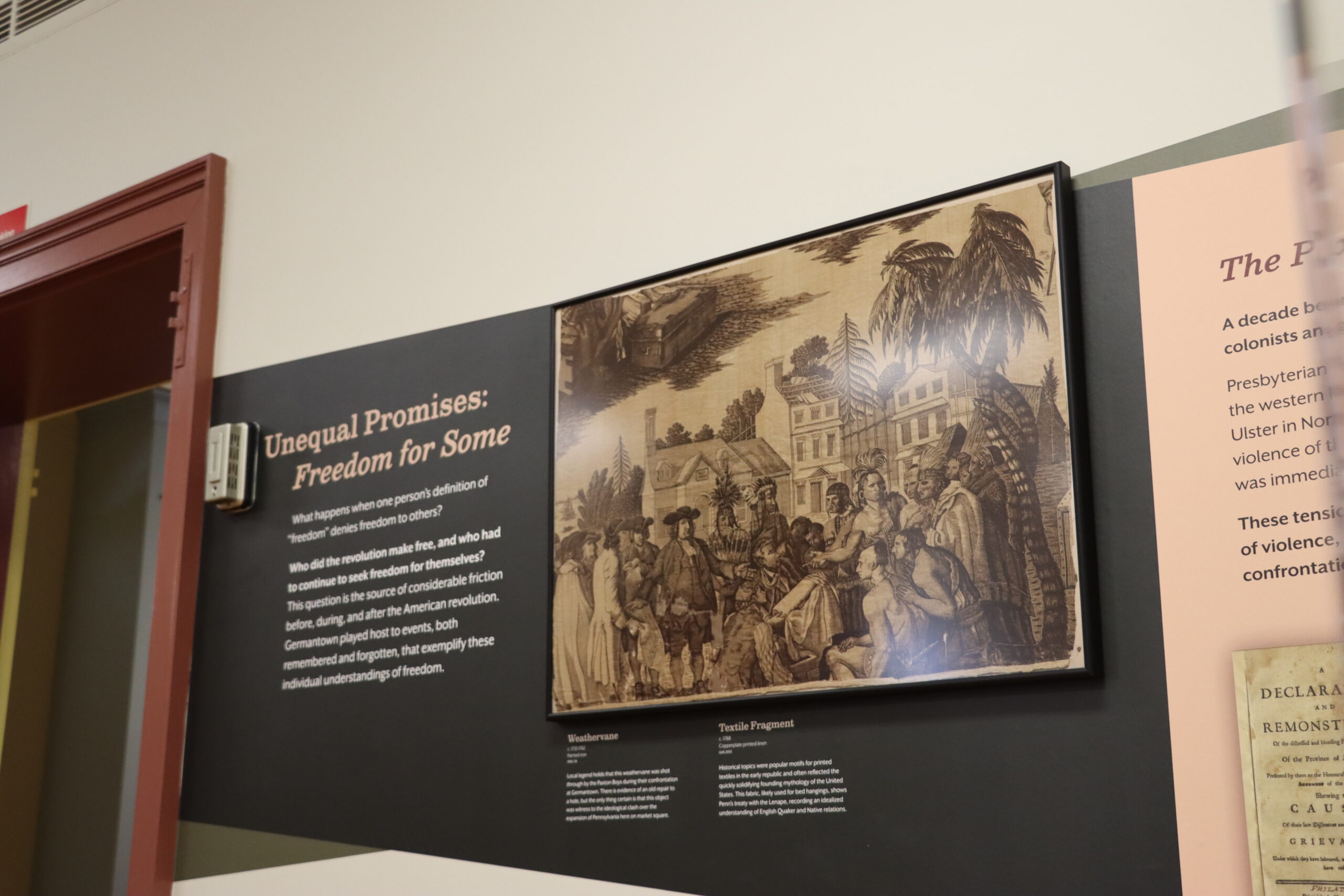
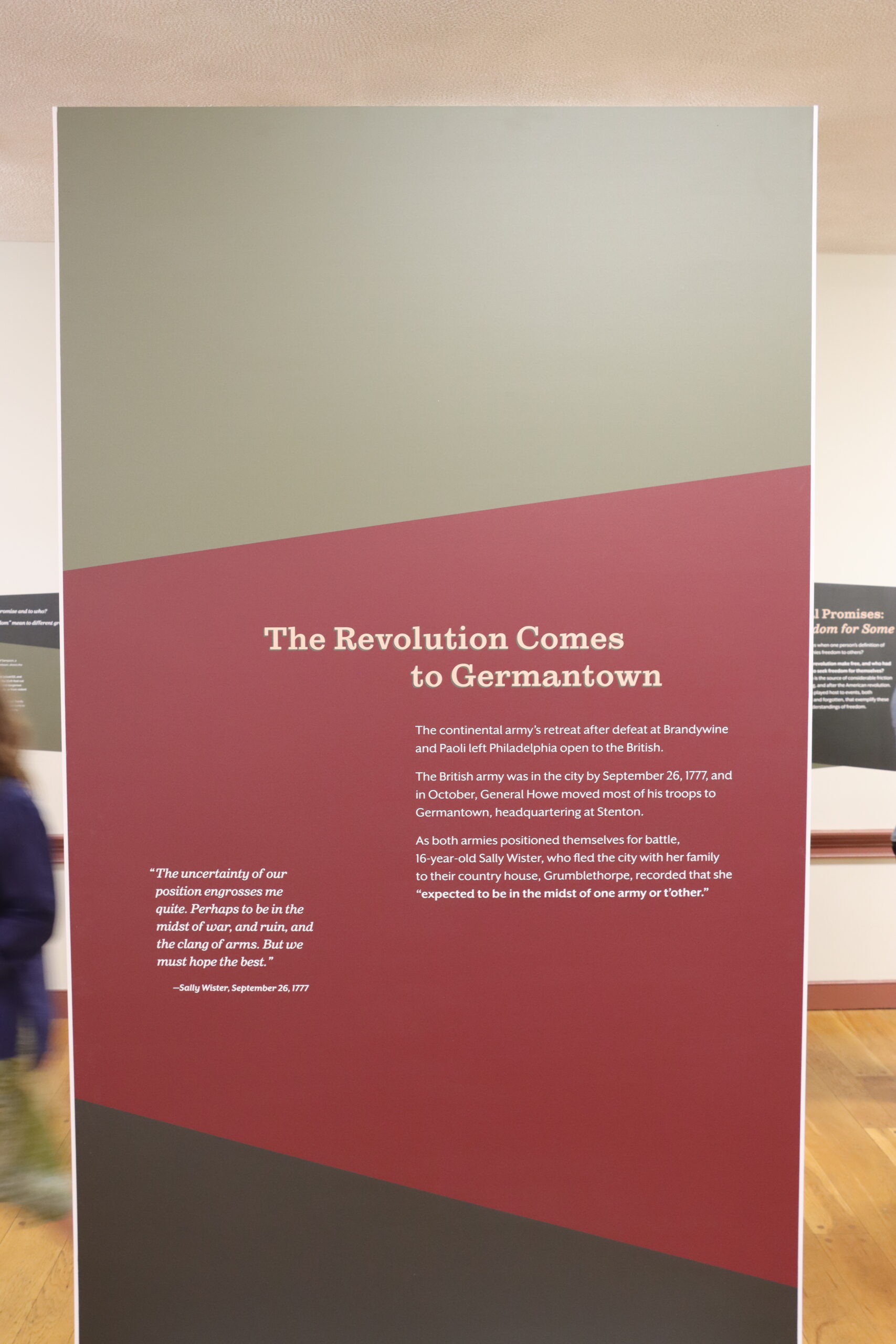
Temple said even with the known abolitionist history of the space, it’s important to know what was going on in tandem with that resistance, including “who was free and who wasn’t.”
‘Rebellion and Remembrance’ runs through the end of 2027.
Councilmember Bass spoke to the crowd about the significance of the Center and its contents, saying there’s no better place to acknowledge American History than in Germantown.
She said: “This exhibit reminds us that history isn’t just about dates and artifacts. It’s about the people who challenged injustice, built stronger communities, and expanded the promise of America for future generations.”
Historic Germantown’s Visitor Center is open to the public from Thursday to Sunday, 12–4 p.m. Admission is free to all.

Rasheed Z. Ajamu is a Germantown-born and raised Black journalist, reporting from a place-based lens to see how things affect life in Germantown. They strive to preserve the stories of Black natives in an ever-changing Philadelphia and Germantown social landscape.