


G-Town Radio Board President Pedro Rodriguez (standing) opening up the debate. Candidates (from L-R) David Griffith, State Rep. Chris Rabb, Dr. Ala Stanford, and State Sen. Sharif Street sit on stage. (Photo: Aubrey Fink)
The following notes were produced as part of our G-Town Beat assignments, where neighbors transform into correspondents, going to meetings that affect our neighborhood, and taking notes. Think a meeting is a good fit? Email rasheed@resolvephilly.org.
MEETING INFO
Title: Pennsylvania Third Congressional District Democratic Debate
Hosts: G-Town Radio & Center in the Park
Date and Time: Tuesday, April 14, 2026, 7–9 p.m. (advertised)
- Meeting Start: 7:05 p.m.
- Meeting End: 8:35 p.m.
Location: Center in the Park (5818 Germantown Ave.)
Meeting type: Hybrid (Live-streamed on gtownradio.com)
Community Sponsors
- Bread & Roses Community Fund
- Foundation for Health Equity
- PhillyCAM
- Reclaim Philadelphia
- Germantown United CDC
- Germantown Life Enrichment Center
- 59th Democratic Ward
DEBATE PARTICIPANTS
Moderator: Solomon Jones
Host of Wake Up With WURD and a Philadelphia Inquirer columnist. Jones is the founder and executive director of ManUpPHL, a non-profit that partners with the Philadelphia School District and criminal justice agencies to reach those most likely to be impacted by gun violence.
State Representative Chris Rabb
Rep. Rabb (PA-200) is a five-term State Representative from Northwest Philadelphia known for advancing progressive policies, challenging corporate power, and championing social and economic justice.
Dr. Ala Stanford
A physical and national health equity leader who served as Regional Director for the US Department of Health and Human Services’ Mid-Atlantic region under President Joe Biden. She is the founder of the Black Doctors COVID-19 Consortium, which delivered testing, vaccination, and care to over 100,000 people during the pandemic.
State Senator Sharif Street
Pennsylvania’s Third District Senator in North Philadelphia, first elected in 2016. An attorney and Morehouse and Penn Law graduate, he has focused his career on housing, economic opportunity, and community development. In the Senate, he serves as Democratic Chair of the Banking and Insurance Committee and is a leader on healthcare access, criminal justice reform, climate action, and cannabis legalization.
Shaun Griffith
An attorney admitted in Pennsylvania since 2003 and before the US Tax Court since 2005, with nearly 15 years of public service with the Commonwealth of Pennsylvania, and experience advising individuals and small businesses as operations manager of USA Tax Service in Roxborough. A Philadelphia resident since 2009, he has lived in West Philadelphia and now resides in South Philadelphia with his wife.
DEBATE STRUCTURE
- Three minutes for opening and closing statements
- Two minutes to answer each question
- One-minute rebuttal option
- Audience submitted questions when registering, they reviewed & selected
- Debate Guidelines:
- Respectful to other candidates & audience
- No campaign literature or signs in the meeting room, but buttons were okay
- Debate recording available on YouTube following the event.
OPENING STATEMENT SUMMARIES
Shaun Griffith emphasized that he is not a politician. He worked for the state government as an attorney. He described strong ties throughout the district–working for a tax practice in Roxborough, currently living in South Philly, and previously living in the Cobbs Creek section of West Philly. He described advocating for universal healthcare (either Medicare for All or something similar), more affordable housing, doubling the minimum wage, and protecting civil liberties. He shared that he decided to run in January after seeing how ICE was being deployed.
State Rep. Chris Rabb said he was running because he was heeding an ancestral call. He aligned with the legacy of social justice movements centering service, speaking truth to power, and organizing communities toward collective liberation. He vocalized support for free transit, guaranteed housing, a federal jobs guarantee, Medicare for All, and national grocery stores. He emphasized that these programs could be paid for by the rich. He pointed to his ten years of experience as a state legislator, securing $1 million for Weaver’s Way Germantown location, bills supporting independent media, and getting five bills enacted into law while in the Democratic minority by working across the aisle. He also pointed to an Anti-ICE bill he introduced in 2017.
Dr. Ala Stanford started by sharing her personal history in the neighborhood, mentioning Germantown & Chelten, Bell Telephone, 23 trolley, Health Center #9, Center in the Park, and the Germantown YWCA. She went to school for 18 years, then came back to the city that made her. She pointed to her love of the people of Philadelphia as being the reason she stepped in to fill a gap when elected officials failed. She described having a vision, creating a plan, and galvanizing support for a program that prioritized Black and Brown folks. She expressed frustration with her experience of knowing people who were born poor and died poor. She emphasized that we don’t need transactional leaders, but leaders here for the people. She pointed to her experiences as a public servant and a surgeon, and how, during the COVID-19 pandemic, President Biden appointed her to bring that work to Washington, DC.
State Sen. Sharif Street expressed that he is someone who gets things done. He highlighted his prime sponsorship of the Pennsylvania Healthcare Exchange (Pennie), through which 500,000 people receive healthcare insurance. He also discussed his involvement in securing $300 million for crime prevention services like counseling and violence interrupters, with violence now at a 60-year low. In discussing high-quality job opportunities, he described securing $16 million for the Philadelphia Technician Training Institute (PTTI). On housing, he pointed to his co-sponsorship of the Whole-Home Repair Program. He emphasized the need to stand up to Trump and his record of suing and winning against the President. He described his experience working as a State Senator for the past ten years, expressing that the best indicator of future performance is past performance and that he knows how to get things done.
QUESTIONS AND ANSWERS
The cost of living is going up due to the war in Iran. Gas prices are through the roof. The President does not have the power to declare war; Congress does. How would you go about taking back that power as a member of Congress?
Griffith started by describing the legislative branch abdicating their responsibility after 9/11, effectively allowing the executive branch to act unilaterally to deploy troops with a vague allegation of terrorism. He described dismantling programs created post 9/11, including the Department of Homeland Security and the Patriot Act. He would want to legislate a mandate to stop the executive branch from deploying troops quickly, as well as cut the budget of the Department of Defense.
- “It is ridiculous that our government always has money to kill people, but doesn’t have money to house people, doesn’t have money to feed people.”
Rabb said we need to amend the War Powers Act, but acknowledged that we don’t have the votes to do it. He described making sure that people in Congress are holding the president and the executive branch to account by using their voices and not normalizing fascism.
- “By being silent, you are being complicit. You are allowing the normalization of a dictator. It requires more people in Congress to be public servants than fewer politicians.“
Stanford started by saying that we should not fund DHS. She called for another impeachment of the president to send a message. She also questioned the President’s soundness of mind based on the statements he has made. She also discussed that it would be easier to increase the minimum wage at the state level than it would be federally.
- “Anyone who says ‘I’m going to annihilate an entire group of people’ is not sound. Anyone who says ‘I am the Christ’ is not sound.”
Street agreed with amending the War Powers Act to restrict the President’s ability to deploy troops. Considering that leadership might block it from coming to a vote, he suggested that he would initiate a discharge petition, getting 218 signatures to get it to the floor. Additionally, it would put Republicans on record on their support of this war. He spoke about Iran as being part of a larger pattern of the President’s, citing Cuba, Greenland, and Nigeria. He then discussed invoking the 25th Amendment and bringing in members of his cabinet for questioning.
How would you improve conditions on a federal level for the working poor as inflation continues to go up?
Rabb pointed to his authorship of the Living Wage for All bill, which he described as the boldest minimum wage bill in the nation. His bill would extend the minimum wage to incarcerated workers who, in Pennsylvania, earn a wage of $0.19/hour. It would also include other workers who are ineligible to receive the minimum wage now, such as neurodivergent and gig workers. He also voiced the need for a federal jobs guarantee, universal basic income, and a living wage instead of a poverty wage. He also highlighted his support for Medicare for All, saying that Griffith was the only other candidate on the stage who believes in cosponsoring the bill. He discussed just receiving the endorsement of the Congressional Progressive Caucus, with the vast majority of those members signed on to the Medicare for All bill. He emphasized that providing these basic needs for people is a way to reduce how much working-class folks are spending just to survive.
Stanford described closing loopholes for the wealthiest Americans, emphasizing the need for them to pay their fair share. She also advocated for extending the child tax credit and providing refundable homebuyer tax credits. She reiterated her position on the minimum wage being easier to pass on the state level. She also expressed the need to stop the war that is costing us $1.5 billion a day.
- “We have to stop the war that, right now, is costing us $1.5 billion a day. We could feed every kid in America in school for 6 years with that.”
Street began by saying that we need to make it easier for regular folks to start businesses by enforcing the Community Reinvestment Act, which was designed to ensure that previously redlined neighborhoods have access to capital. He expressed support for Rabb’s minimum wage bill as well as the version of the current House bill that would take the minimum wage from $7.25 to $15. He discussed the need for passing a clean energy bill as utility bills are rising, describing an alternative energy portfolio standards bill that he introduced in the Senate recently that would increase our energy options and bring down costs. He also advocated for taxing capital gains as ordinary income so rich folk can pay their fair share.
Griffith started by voicing agreement with Rabb’s stance, while adding that the fight for $15 is outdated and we should consider $20. He expressed alignment with a left-wing internet contingent, suggesting withholding votes until the minimum wage increase was brought to the floor. He reiterated the need for a universal basic income and added the need to cut FICA taxes on the first $50,000 of earnings.
What would you do in Congress to ensure housing and income for seniors?
Stanford discussed making sure our seniors know about the existing programs that can support the repair and maintenance of family homes, as well as walking through the process with them. She described social safety net programs as a tool for opportunity, not a crutch.
- “The social safety net is not a handout – it’s your promise for the work you have given to the nation. I grew up on SNAP and Medicaid and public assistance, and I know that that support is a bridge, it’s not a crutch. That bridge helped change my life, so protecting Medicare and social security… I will oppose the efforts that raise the retirement age, that privatize social security, or convert Medicaid into a block grant, and I will fight any attempt to use budget reconciliation or manufactured debt crisis to gut these programs.”
Street stated that we need to restore Medicaid cuts that pay for home and nursing home care. He described social security insolvency as a result of the income cap, sharing that regular folk pay 12% on social security taxes while Elon Musk pays .0000002%. He emphasized that if wealthy folks paid 12%, Social Security would become solvent instantly. He reiterated the importance of the Whole Home Repair Program and a green energy bill to help bring down utility costs.
Griffith advocated for supplemental entitlement associated with social security and Medicare, specifically for housing. He highlighted the challenge of living on a fixed income, as many seniors are, and how the cost of living often outpaces social security adjustments. He also highlighted the need for universal healthcare, pointing to prescription and healthcare costs.
Rabb discussed re-upping the low-interest housing tax credit. He voiced agreement with Street’s point to remove the cap on Social Security so that wealthy people pay their fair share. He discussed universal basic income, the home repair program, and Medicare for All.
- “We need to make sure that folks who have a home have the funds to act and prepare them so they can stay in place.”
What specific steps would you take to improve public safety while also addressing some of the root causes, like poverty, housing instability, and access to services?
Street referenced Maslow’s Hierarchy of Needs, stating that our first instinct – above food and education – is to feel safe. He referenced his work as a state legislator to secure $300 million to fund programs for public safety, including violence intervention, conflict resolution, and job opportunities. Speaking more about job creation, he reiterated PTTI as a place where people, sometimes ex-offenders, gain the skills to get a family-sustaining job. He spoke on the need to address recidivism, explaining that people don’t always know about the support services available to them. He spoke about cuts to violence prevention dollars by the Trump administration and the impact violence has on people’s everyday lives.
- “I would raise that issue and make sure that people understand that those programs work and they save lives. I’ve lost a loved one in gun violence, and I understand how important. While it may not come up that often, it comes up every day in the lives of the people I work with.”
Griffith pointed to the mental health crisis and argued that a major factor in solving it is universal access to health care, stating that mental health care is health care. On guns, he advocated for waiting periods, background checks, and closing gun show loopholes. He discussed poverty as a driver of domestic violence, explaining that poverty creates tremendous stress.
- “Universal basic income would probably make our country safer.”
Rabb shared that he uses the term “community safety” in lieu of public safety because he believes that no matter what community you are a part of, you deserve to feel as safe as the richest, whitest “dude” in America.
- “Folks who inhabit Black bodies are looked at differently in this society. Crime and poverty is racialized, and it has a Black face. Unless and until we address the root causes of these things, we’re not gonna get anywhere. And part of that is addressing systemic racism, which is connected to capitalism, which is connected to poverty and joblessness. All of these things are connected.”
Stanford expressed support for forensic DNA as a way to solve the crimes. She also advocated for stricter gun laws for “bad actors,” including fines and imprisonment. She pointed to ghost guns as committing most of the murders. She also clarified that she supports universal healthcare and Medicare for All. She discussed many working people who fell off Pennie who need better constituent services to navigate the paperwork of the new work requirements.
Is Philadelphia’s ward system fair to voters and candidates, and if not, how would you change it?
Griffith spoke about spending most of his time last month in court because the Democratic City Committee has funded a lawsuit against him and his campaign. He noted that they have also brought suit against four other candidates, including Stanford. He detailed that the DCC is “taking him to the Supreme Court” because he won the suit in the Commonwealth court. He advocated for more direct engagement between candidates and voters, like this debate hosted by G-Town Radio. He also shared his belief that the Democratic Party is “extremely unpopular” in America, joking that its approval rating is on par with root canals. He expressed that “people who genuinely care about their communities.” He said the Democratic machine is working overtime to keep people like him off the ballot.
Rabb said that he is not getting many ward or politician endorsements because the political class “doesn’t have much love for him” because he speaks truth to power, isn’t transactional, and doesn’t “kiss the ring.” He believes that power should be diffused amongst the people. He emphasized that voters have the choices: to support someone with the political class behind them, or to support someone who receives money from super PACs (“to the tune of about $2.5 million”). He highlighted that his base of small donors is more than all of the other candidates’ donors combined. He emphasized that small donors hold candidates to account. He said he has never taken corporate PAC money.
- “I don’t believe in concentrated power – I believe that power needs to be diffused amongst the people.”
Stanford started by saying the ward system is not fair. She recommended limits on how long someone can be a ward leader and/or ward committeeperson as well as not allowing ward leaders to hold elected office, to reduce transactional politics. She spoke about someone trying to have her removed from the ballot because of her “Dr.” honorific, citing it as an “unfair advantage” even though she is a physician. She also detailed their investigations into her taxes and nonprofit. She ended by saying:
- “Bring it – because I’ve been an underdog my whole life and every time I win and I rise.”
Street explained the process of becoming a ward committeeperson as getting 10 signatures from your neighbors. He said it doesn’t require a super PAC that “gives you $2.5 million” from people across the country or a New York firm coming to “run your business.” He emphasized that the ward process is egalitarian and that it is “certainly better than out-of-state, multi-million dollar PACs trying to buy elections.”
There is an attack on mail-in ballots and voter registration by the president and his party. How would you fight back to make sure Philadelphians can actually vote?
Rabb spoke about Philadelphia’s role in the 2020 election, saying that we “saved America,” transcended partisanship, embraced democracy, accountability, collaboration, and transparency. He said that is what’s going to save us on May 19. He emphasized that elections are controlled by counties and that Republicans can’t tell Philly what to do. He spoke about the national issue of voter suppression as part of the “Republican playbook.” He emphasized the need for Democrats to show up in the voting booth and on the streets. He highlighted the recent attempt by “three billionaires” to oust the Democratic judges on the State Supreme Court, which was unsuccessful.
Stanford highlighted constituent services as a way to ensure voters have what they need. She spoke about unhoused patients who visit her facility as getting IDs free of charge. She used the remainder of her time to address funding, highlighting her history as being a “section 8, welfare child” born to a 14-year-old mother and “working her ass off” to become who she is today. She said she “could have gone anywhere” but chose to return to Philly to do the work that elected officials did not. She spoke about receiving the recognition of national organizations for her work as well as being named a top leader by Forbes, expressing that if they want to fund her to take care of us, she won’t apologize for that.
Street started by saying that the president’s attempt to require voter ID is unconstitutional. He explained that he doesn’t believe it will pass, but if it does, we would take it to court to have it struck down. He detailed his role as a lead plaintiff in a 2020 suit against Trump. He expressed agreement with Rabb on getting out to march and organize. He said if he were elected to Congress, he would pass the John Lewis Voting Rights Act to protect the rights of everyone.
Griffith said that the attack on mail-in voting is an attack on our fundamental rights. He highlighted the impact of mail-in voting restrictions on disabled, elderly, and working people.
In early 2026, the federal government reduced the number of childhood vaccines from 17 to 11, removing routine recommendations for flu, RSV, and hepatitis. Pediatricians widely condemn the move. Do you agree with these vaccine recommendations? If not, what would you do in Congress to stop them?
Stanford offered to answer last to give the other candidates the chance to “share their knowledge.” She then emphasized that there are times to legislate and times to lead. She pointed to the American Academy of Pediatrics and Paul Offit, a leading virologist and vaccine expert at CHOP, as using their platforms to talk about this issue. She discussed an uptick in measles cases, from very few in January to over 3,000 cases, some of those deadly. She advocated for the removal of the members of the Council of Immunization Practices because they have been handpicked. She pointed to this year’s flu shot being only 38% accurate, where it is normally 68-70% effective as a direct result of U.S. Secretary of Health and Human Services Robert F. Kennedy Jr.’s efforts.
- “[RFK] is not a medical leader. He does not have subject matter expertise. And again, you can work on the bill, but leadership and knowledge in the space, using your platform to inform the nation with your trust, is how we move the needle.”
Street expressed disagreement with the vaccine recommendations. He said he respected the recommendations of Stanford and that someone with credentials like hers should be running the Department of Health. He advocated for using his subpoena power to make sure we get the appropriate information and begin impeachment proceedings for RFK, saying that “removing him will make us all much safer.”
Griffith also disagrees with vaccine recommendations. He said RFK is unqualified and we should try to impeach him as well as the secretaries of education and environmental protection. He ended by quoting Sen. Warren — “Personnel is policy.”
Rabb agreed with the other candidates, saying they are all “pro-science” and “against aggressive mediocrity at the highest level.” He added that, as a member of Congress, you have the opportunity to use the “bully pulpit” to encourage institutions to lead on this issue. He suggested asking the American Academy of Pediatrics and Philadelphia-based hospitals and insurers to make sure that all of these vaccines are covered. He spoke about not waiting for the federal government to act, but holding local institutions to account to be part of the solution.
We’re at war right now, and the administration just reinstituted automatic sign-ups for selective service. We have veterans here in Philadelphia, and about 284 of them were homeless as of early 2025, a 20% increase from the previous year. What would you propose for the Veterans Administration to make sure veterans in Philadelphia are taken care of?
Street advocated for fully funding the Veterans Administration (VA), veterans’ hospitals, and the health system. He also advocated for the expansion of the low-income tax credits targeted at veterans and expanding the preference for veterans for federal jobs. He said veterans should have greater access to capital to start businesses. He said the president’s “drunken text messages about ending civilizations” are fundamentally disrespectful to all those who served, as they swore an oath to protect the constitution not the whims of the president. He advocated for the passing of a War Powers Act that protects our armed servicemembers and restricts Trump’s ability to start unauthorized wars.
Griffith spoke about expanding veteran services and streamlining the process to access benefits. He recommended increasing the draft to include men and women.
- “And the reason is because when both rich kids and poor kids alike could be sent overseas to die or to kill, we’re going to have a lot fewer wars.”
Rabb said having unhoused veterans is a fixable issue that other countries, even states, have figured out. He pointed to a “lack of political will” to make it happen. He said the country has the money, but are sending it to Iran. He also advocated shutting down recruitment facilities in Black communities that are “sending our babies over there.”
Stanford referenced her work with AHARI (A Home Is A Right) at her health center, working with veterans to ensure their care through the VA. She also highlighted often undertreated conditions like exposure to toxic chemicals. She pointed to Riverview Wellness Village in the Northeast, with many unhoused veterans there. She spoke about using the many unused buildings in Philadelphia to house veterans.
Dwight Evans is widely respected in this community for his accessibility and focus on constituent services. How would you build on that legacy, and where would you take a different approach to meet the district’s evolving needs?
Griffith commended Evans on his time spent in and money brought to the neighborhood, including Project HOME and PHA. He also highlighted that Evans has sponsored most of the bills introduced by “people he admires,” including California State Reps Ro Khanna, Pramila Jayapal, and Alexandria Ocasio-Cortez. If elected, he shared that he plans to be in Philly every week and get to know his constituents so he knows how to best help.
Rabb highlighted his collaboration with Evans’ district office. He said they “don’t agree on a lot of things politically” but that he knows Evans cares about the communities he represents, and it shows through high-quality constituent services. He emphasized the importance of his staff working closely with Evans’ team to learn from what he’s done. He also pointed to Evans as being “born out of a movement” of folks trying to integrate a racist Democratic machine, making sure “Black folk could represent Black folk.”
- “Congressman Evans has never used our political differences to get in the way of providing meaningful services to the folks we both represent, and I really respect that about him.”
Stanford spoke about looking up to Evans, as well as the late former PA 201st District State Rep. David P. Richardson, as a kid. She referenced Evans’ endorsement of her for this position because of her record, work, courage, commitment, drive, and boldness. She spoke of the value of his mentorship. She aligned with his championing of housing, education, and healthcare, and how these factors are connected to racial injustice and civil rights.
- “He tells me every day: ‘Keep the people first.”
Street congratulated Evans on his 46 years of service. He pointed to Evans’ legislative record ahead of entering Congress, saying he had already “gotten things done” as a representative, specifically mentioning the Ogontz Avenue Miracle. Street aligned himself with someone of similar experiences of delivering resources ahead of entering Congress. He highlighted the ways their offices have worked together over the years, including community baby showers – helping to address maternal health issues – as well as the African American Male Health Wellness Program, providing screenings for 1,500 men for things like prostate cancer. He also referenced a supplier diversity program. He ended by acknowledging the legacy of Lucien Blackwell and noting that his widow, Jannie Blackwell, has endorsed Street for this position, and in the past, William H. Gray III, whose son Justin Gray has also endorsed Street, and David P. Richardson.
CLOSING STATEMENT SUMMARIES
Street began by thanking the audience for coming out. He referenced Barack Obama talking about the “fierce urgency of now,” highlighting issues in our community like grocery affordability. He emphasized his record of “getting things done,” citing his work of providing resources for gun violence prevention, the school district, PTTI, Whole Home Repair Program, Pennie, protecting our right to vote, and taking Trump to court. He spoke about how, if elected, he will restore healthcare cuts.
- “I have a history of getting things done as a state legislator. I have a history of passing legislation [and] securing resources. That is the basic job of a legislator, whether you serve in Harrisburg or Washington. This is not the time for on-the-job training; this is the time for someone who knows how to get things done. I have done it as a member of the State Senate; I will do it as a member of Congress. I need your votes to get it done.”
Stanford agreed that as a congresswoman, you need to legislate, but that you also need to lead. She argued that sometimes legislation is not the answer, citing that suing Trump over voting access won’t help us in five weeks when this primary election happens. She spoke about having federal experience, bringing policy and legislation, and being the only candidate appointed by a sitting president to work in health and human services. She spoke about her reputation being rooted in service, not in who her parents are, and being a selfless leader who puts the people first.
- “The only reason why you all know my name is because the people you elected to serve you fell short. Otherwise, I would still be in the operating room, taking care of patients. I filled a gap because those we needed to serve us at that time were waiting for someone to tell [them] what to do and waiting to legislate. But what we needed was a leader to identify, to have a vision, and step out on faith.”
Rabb shared his experience working on the legislative staff for the first Black female senator, Carol Moseley Braun. He highlighted that he has been endorsed by the Congressional Progressive Caucus, which Evans belongs to. He spoke about the bold vision that people want that the Democrats have not delivered, citing Medicare for All, universal basic income, guaranteed jobs, and social housing. He referenced that on April 15, the public will be able to see where all of the candidates’ money comes from and encouraged voters to look at those reports carefully, specifically who has the most Philly donors, small donors, the ones not connected to private equity or MAGA billionaires. He shared that, if elected, he would be joining a larger subset of progressive, substantive policy makers in Congress to push the Democratic party further so that it listens to the base.
- “I am an unapologetic progressive who does believe in pragmatism, but I also believe in the boldness of these ideas where we have not had the political will to execute them because of monied interests.”
Griffith joked that following Rabb is like trying to perform on stage after Elvis. He highlighted that he is a lifelong progressive, tied to the Democratic Socialists of America, working in San Francisco, suing polluters of the bay, and helping subsistence farmers protect their land from the oil and gas companies. He moved to Philadelphia in 2009 and loves the people of Philadelphia. He argued that it would be on-the-job training for any of the candidates, as none of them has experience in the U.S. House. He pointed to AOC as an inspiration and his hopes that she runs for President in 2028. He referenced recent reporting from the Philadelphia Tribune on the topic of campaign money and encouraged voters to read those articles. He shared that his campaign raised $7k in the first three months.
Director of Center in the Park, Reneé Cunningham, closed the meeting.
WHAT’S NEXT
Neighbors should consider participating in the upcoming primary election on May 19, 2026.
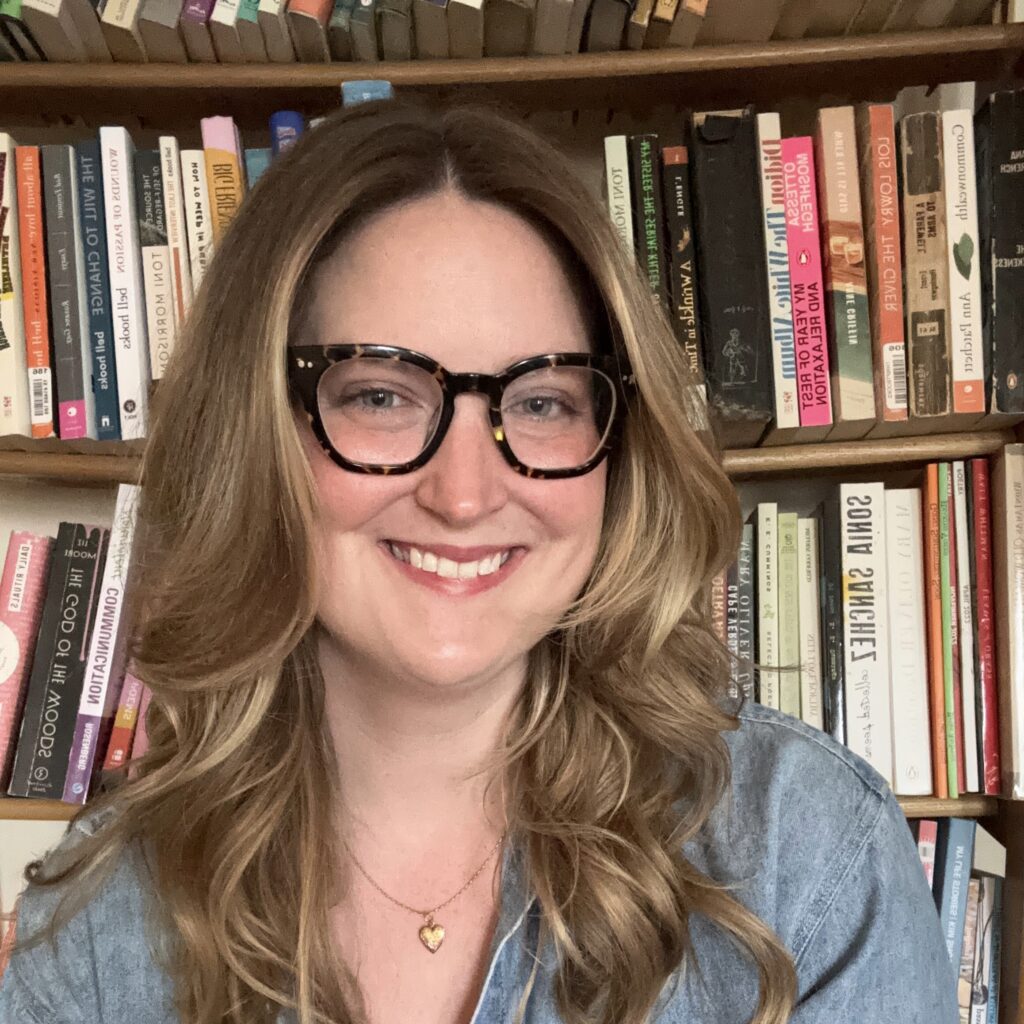
Aubrey Fink is a Germantown neighbor, designer, and artist with a passion for local storytelling. She is inspired by the people, places, and culture that make Germantown special and believes community flourishes through connection, curiosity, and shared stories.