


Phlow Philly period kits. (Photo courtesy of Aunt Flow.)
This story was done in collaboration with Equally Informed Philly, another Resolve Philly program that distributes vetted, actionable news, stories, and resources centered on the perspectives and information needs of underrepresented communities.
If you ask most people who menstruate how they feel about monthly visits from ‘Aunt Flo,’ they’d probably say she’s rarely welcome. But a new Aunt Flow has found a home in Philadelphia, and instead of cramps and bleeding, she’s bringing free tampons, sanitary pads, and menstrual education to restrooms in the neighborhood.
Phlow Philly is a new city initiative addressing period poverty — the gap in access to menstrual products faced by women and girls.
Aunt Flow, a woman-owned company that makes sustainable period care, is partnering with the Department of Health’s Division of Reproductive, Adolescent, and Child Health to distribute 4500 period kits and install free-vend product dispensers in community spaces throughout the city. Through a separate initiative, Aunt Flow is also partnering with the School District of Philadelphia to ensure student access to menstrual products through the installation of 136 free-vend dispensers in School District facilities.
In Germantown, these spaces currently include the Joseph E. Coleman Library (68 W. Chelten Ave.) and the Belfield Recreation Center (2109 Chew Ave.).
Sarah Howard, Vice President of Marketing and Impact for Aunt Flow, speaks to the need for programs like Phlow Philly to ensure accessibility.
“Hygiene products are typically one of those items that is difficult to afford, considering it’s not covered by SNAP or WIC benefits, and as we know, there’s more and more stress on those programs in light of all of the funding challenges right now,” she says.
The 2025 State of the Period Study reports that around 1 in 4 adolescents in the U.S. struggle to afford period care. For lower-income teens, that number rises to 34%, with 45% of Black teens saying that financial stressors in their homes have adversely affected their ability to buy menstrual products.
Compounding the affordability factor is the stigma associated with menstruating, with the study indicating that “silent suffering” defines the teen experience of having a period.
62% of those surveyed said that society makes them feel ashamed of their periods, which elicits a behavioral response. 77% of all study respondents said that they hide period products when going to use the bathroom, compared with 82% of lower-income respondents and 83% of Black respondents.
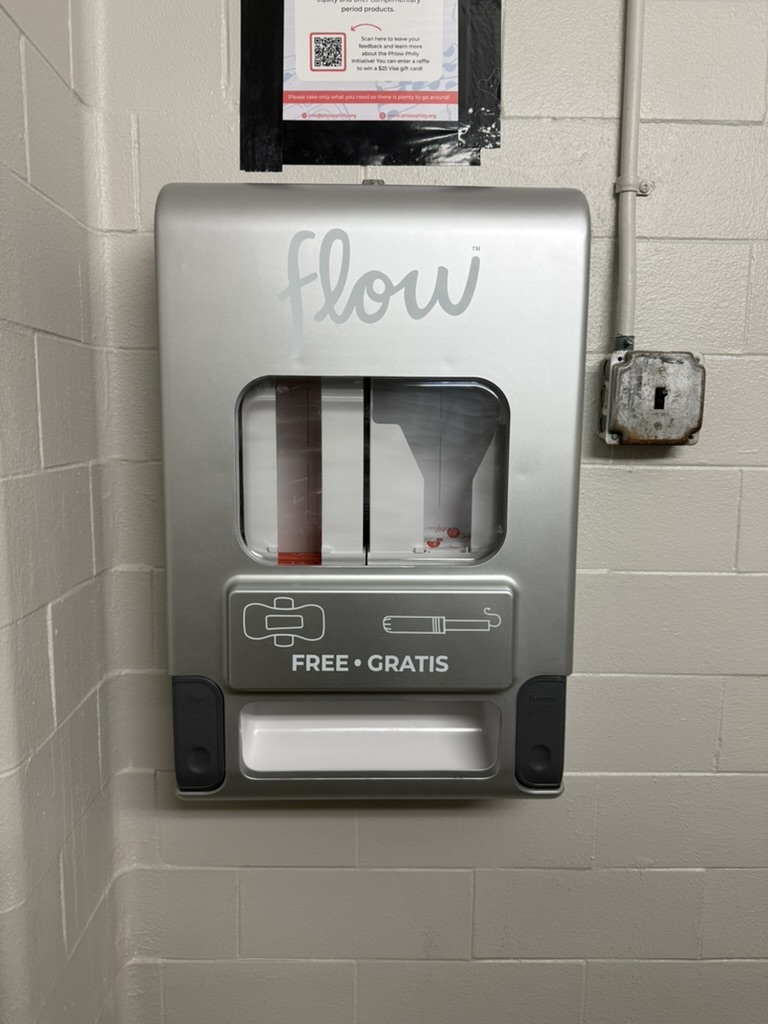
The Aunt Flow dispenser at Belfield Rec Center was installed in September and sees consistent usage by the youth who frequent the center, according to Donnell Martin, Belfield’s facilities supervisor.
Despite the obvious demand for the dispenser’s products, which are regularly refilled by the center with products provided by Aunt Flow, Martin says that prior to its arrival, kids weren’t asking for pads and tampons. He points to the same stigma referenced in the State of the Period Study and a lack of open discussion as reasons why.
“That’s usually not a conversation that our children usually have. I think it’s really based on the comfort level because those are not conversations that’s usually held in Black families,” notes Martin.
Martin also says that while young men and women had rarely approached him in the past, they would sometimes ask his female colleagues at Belfield if menstrual products were available. Overhearing those conversations, Martin would offer whatever pads or tampons the center had on site.
Thankfully, now, no one has to ask.
Staff at Coleman Library expressed similar sentiments around period product demand. Coleman’s dispenser hasn’t been installed yet, but the ever-creative and always resourceful librarians there have repurposed a book cart into a hub for period kits, which remain left over from previous menstrual equity initiatives.
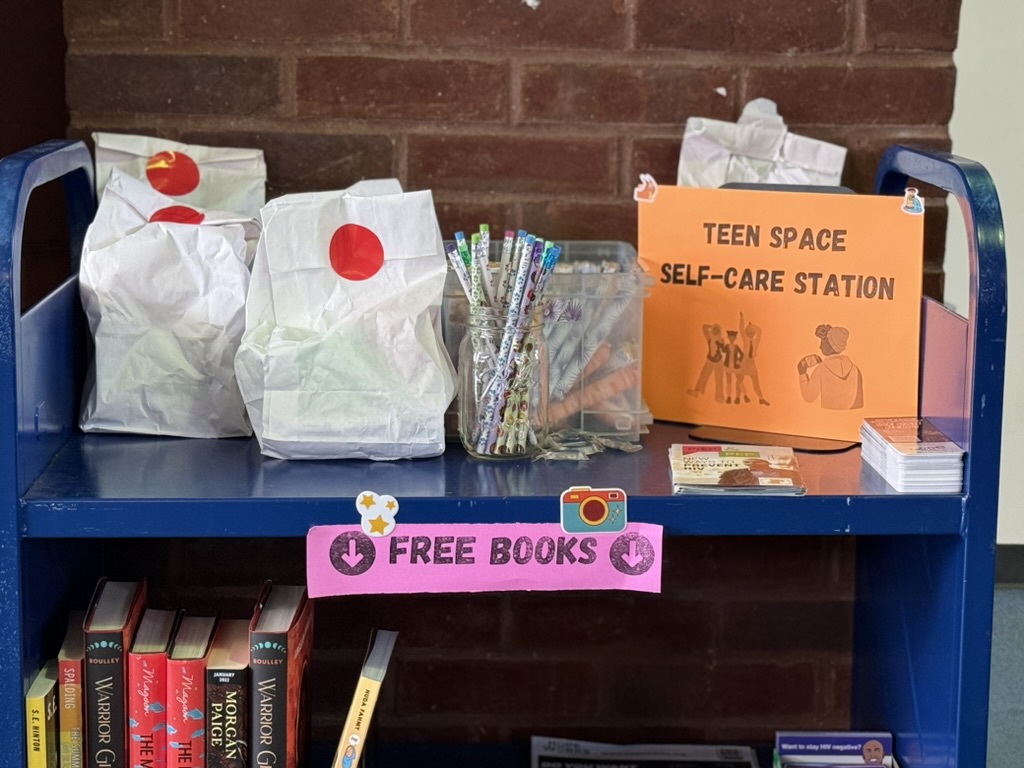
Librarian Molly Ward says folks eagerly take advantage of the free kits, sometimes resorting to more playful uses, but uses nonetheless.
“Teens, adults, males, females, come in, take them, sometimes middle school kids giggle about them, or rip them apart and throw them at each other,” Ward says through a slight giggle herself. “But more often than not, people just come and help themselves.”
Like Belfield, Ward says they have to regularly stay on top of refills. Also like Belfield, it’s not just women and girls taking note.
“Sometimes a male person will say, ‘Am I allowed to take these?’ and we say, of course, you know, for the females in your life. Everyone is welcome.”
Both Belfield and Coleman were chosen as locations for the Phlow Philly initiative because of the high levels of foot traffic coming through the doors. Howard says that the goal is for all locations on the Phlow Philly map to be fully outfitted with Aunt Flow dispensers and products by the end of the year.
State Representative Darisha Parker notes that even once that happens, there’s still more work to be done.
Over the past year, Rep. Parker has introduced two bills aimed at addressing menstrual equity. PA House Bill 1100 would let Pennsylvania apply for a federal waiver, so SNAP and WIC recipients could use their benefits for diapers and menstrual hygiene, if allowed by the government. PA House Bill 1101 would create a grant allowing public schools to increase access to products in school buildings.
She’s hopeful that her efforts to address menstrual equity at greater levels will come to fruition when a state budget is passed. For Rep. Parker, as with many others in the neighborhood, period poverty is a personal issue.
“I was that young lady in the eighth grade that it happened to, and sadly, I had to use the paper towel to wrap up my panties…so I literally was suffering the entire day…so I don’t want that to be anyone’s experience,” Parker says.
Enjoying what you’re reading? From now through Dec. 31, Germantown Info Hub is raising $14,500 — and every gift is matched dollar-for-dollar through NewsMatch. Your support helps us keep reporting with our neighbors, not just about them. Give here.